
Last updated October 16, 2026
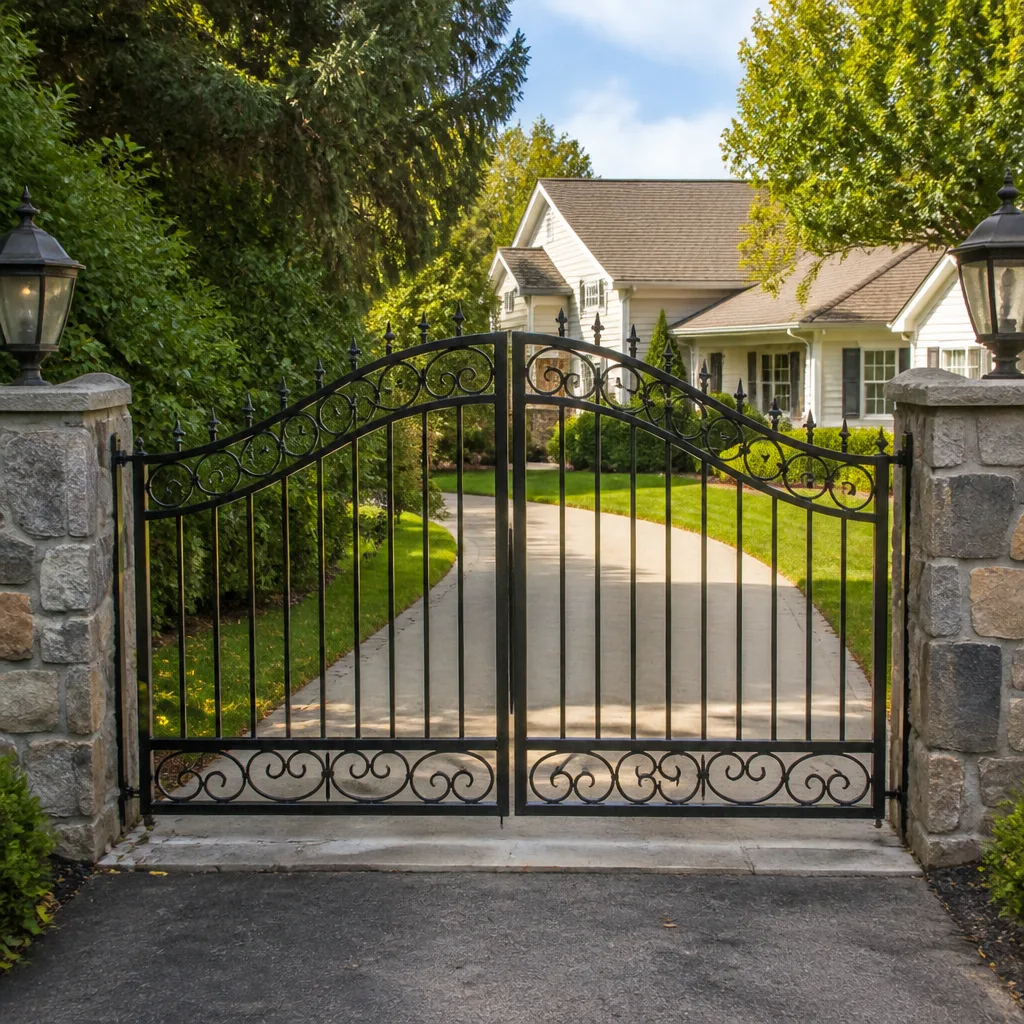 Wrought iron
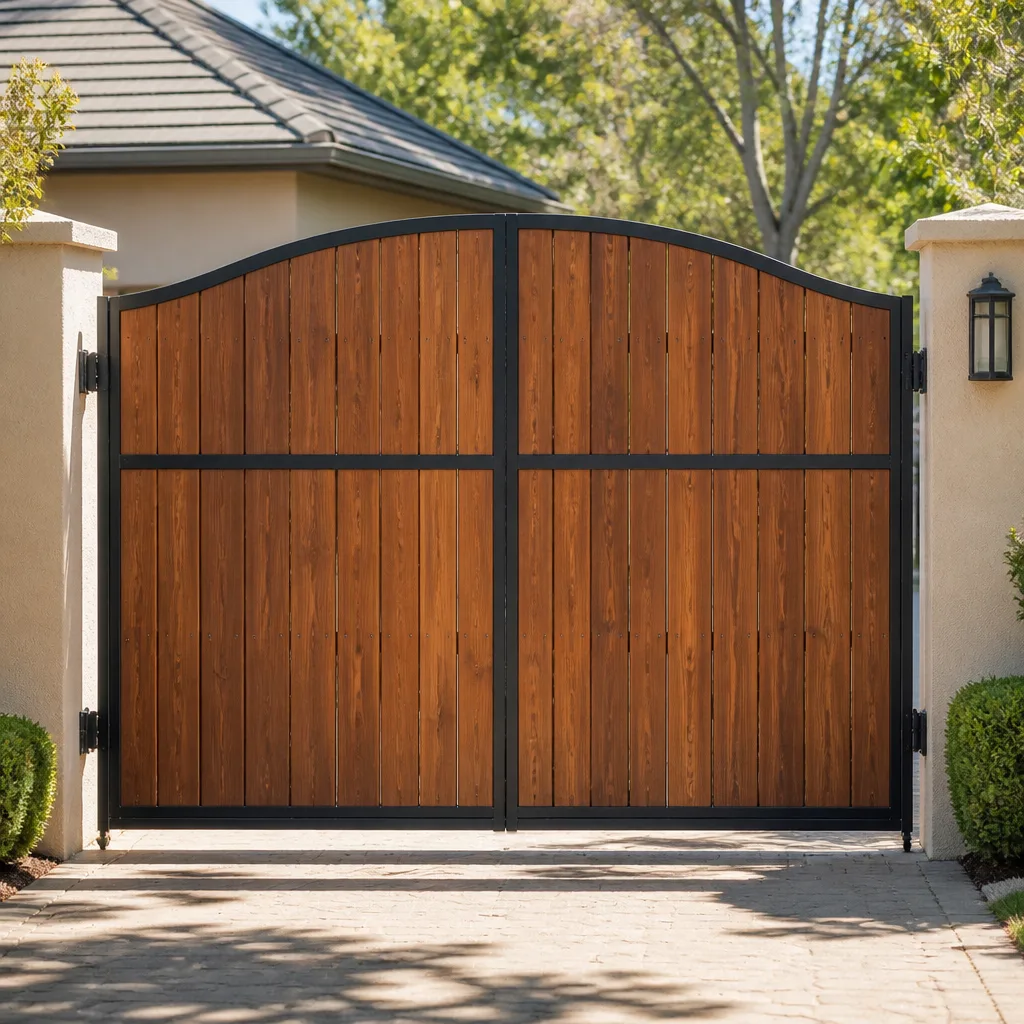 Wood & steel frame
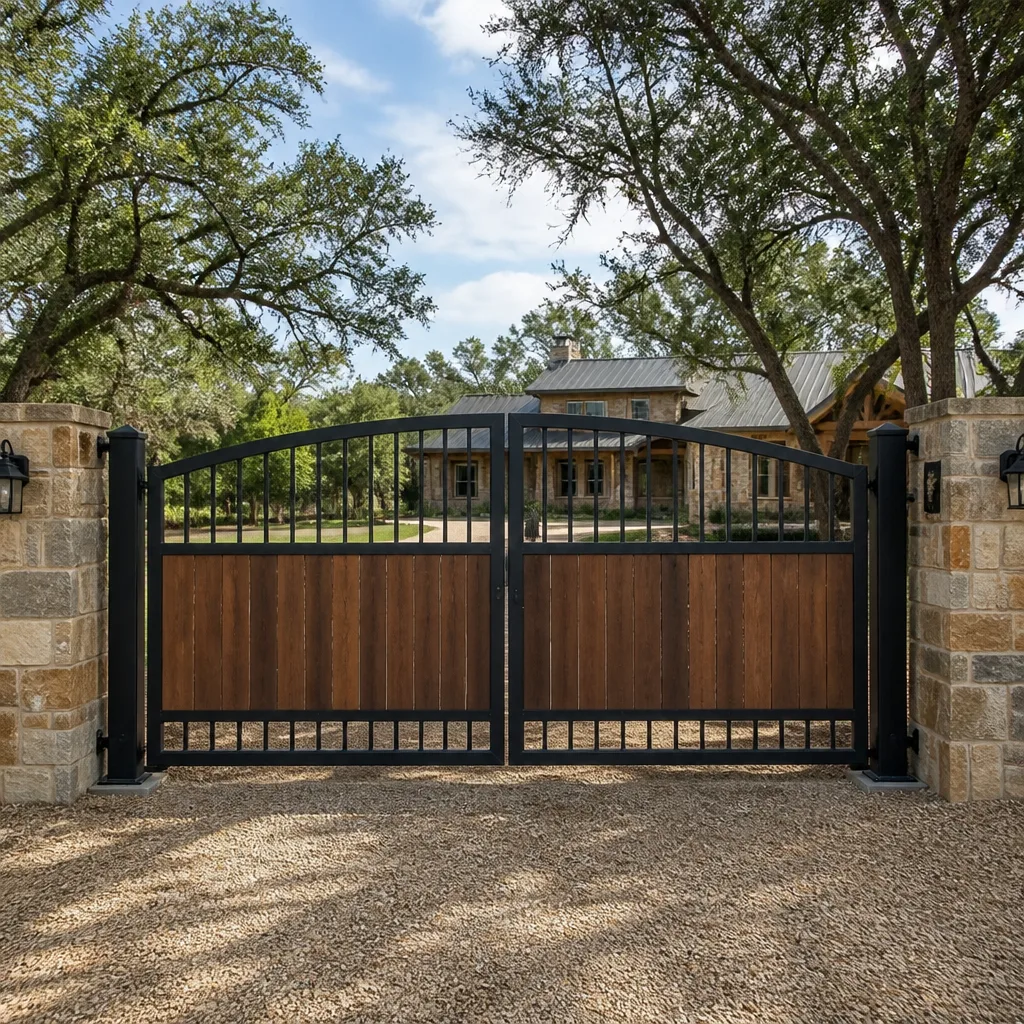 Farm & ranch
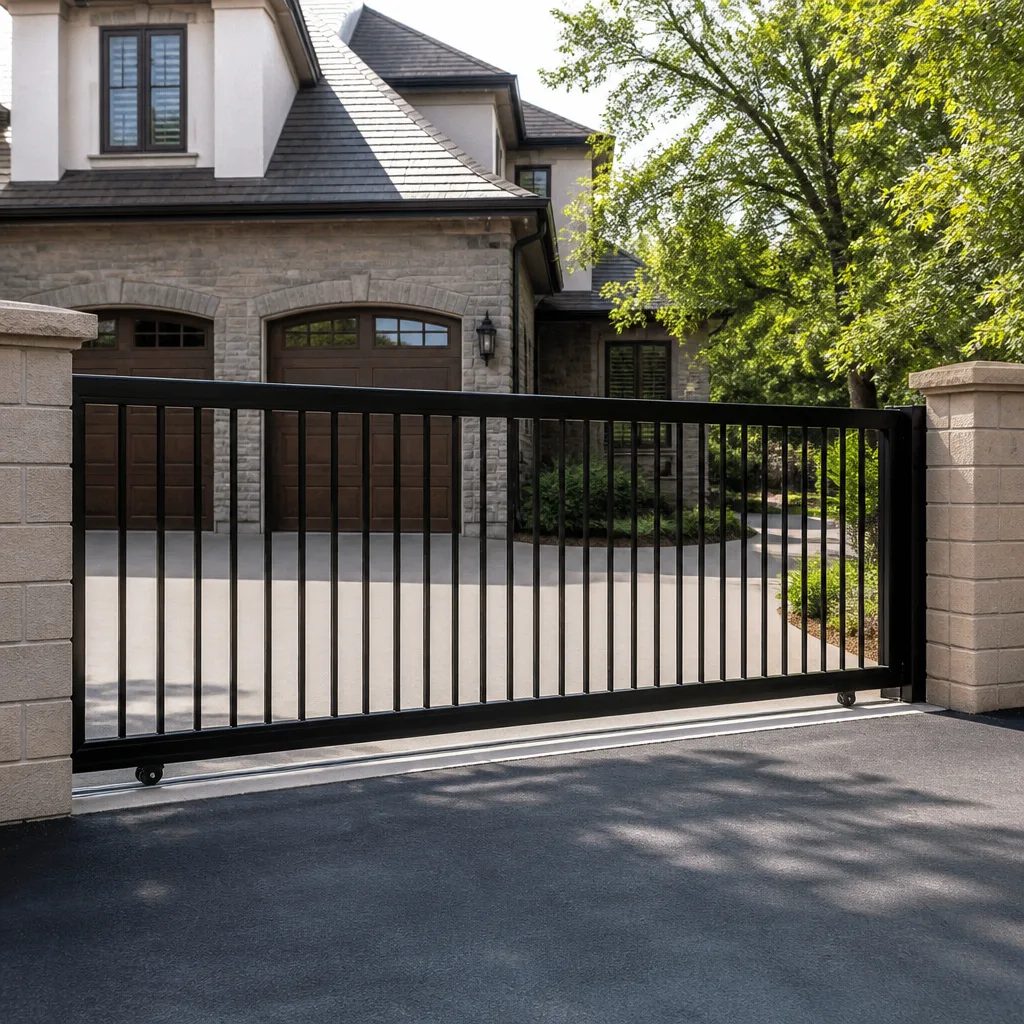 Sliding driveway gates
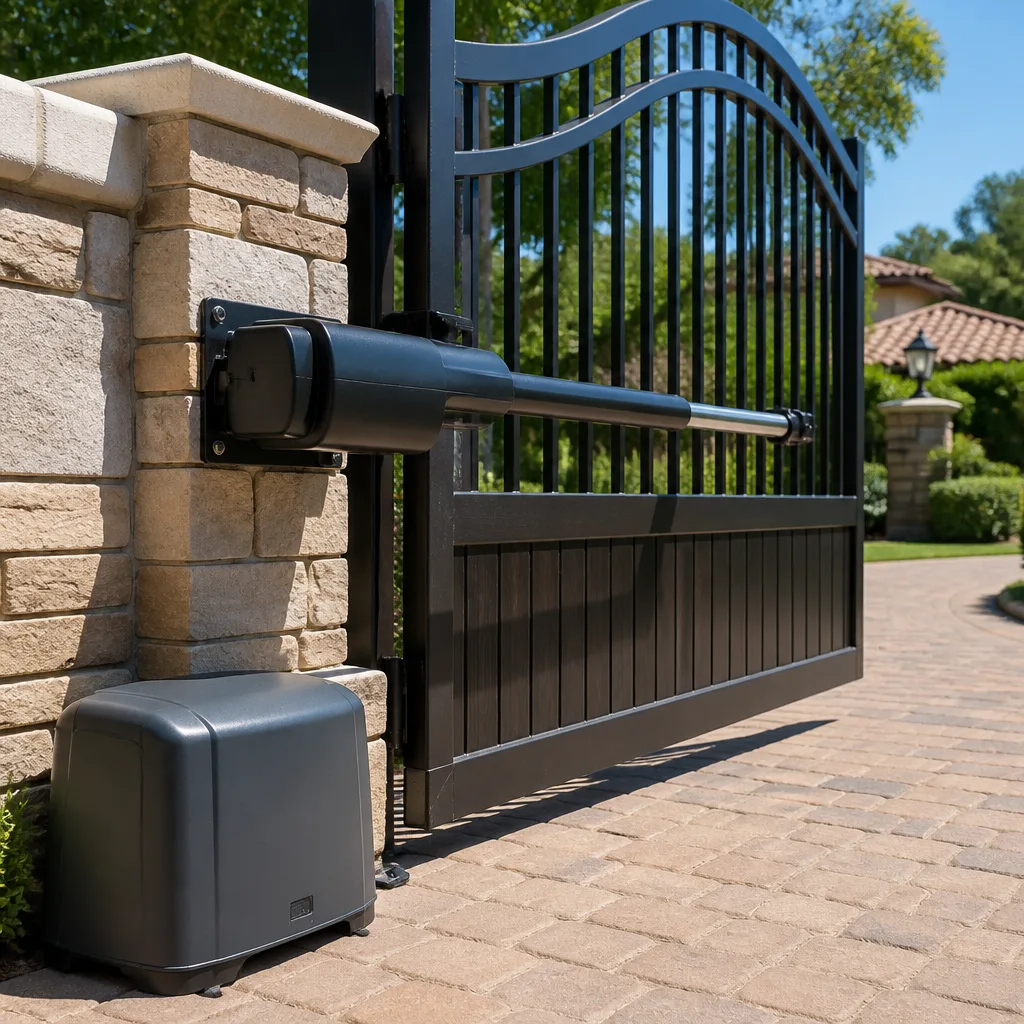 LiftMaster operators
Free on-site gate assessment - hinges, posts, and your LiftMaster or Nice gate operator checked before anything is quoted
The assessment is free and the quote is the invoice.
Get your free estimateDIY vs Professional Gate Repair: The Orange County Homeowner’s Decision Guide
Replacing a gate’s keypad yourself is a completely reasonable Saturday project. Adjusting the same gate’s safety reverse force setting without calibration equipment? That can create a code-violation liability that your homeowner’s insurance may not cover if the gate injures someone. Most Orange County homeowners don’t realize the line between “safe DIY” and “legal exposure” runs straight through their gate opener’s control board. This guide draws that line precisely, task by task, so you can decide with confidence instead of guessing.
Styles & brands we work with
Quick Answer
DIY gate repair is safe for about 20% of common tasks: keypad replacement, remote programming, sensor cleaning, hinge lubrication, and battery swaps. Anything involving the motor, control board, safety sensors, or load-bearing hardware should be handled by a professional, because DIY errors in those areas can void UL 325 safety certifications, create liability if the gate injures someone, and often cost more to fix than the original repair would have. In Orange County, where coastal salt air and inland heat accelerate gate wear, the risk-adjusted math usually favors calling a pro for anything beyond basic maintenance. Our Gate Repair services cover everything from safety sensor calibration to full motor replacements.
Table of Contents
- The Real Decision Factor: Safety and Liability, Not Just Cost
- Task-by-Task Matrix: DIY-Safe, Tool-Required, and Off-Limits
- UL 325 and California Liability: What DIY Adjustments Can Void
- Hidden Costs of DIY Gate Repair Errors in Orange County
- Brand Accessibility: Which Gate Openers Let Homeowners Diagnose Problems
- Try This First: Five Gate Problems You Can Resolve Before Spending Money
- Common Mistakes to Avoid
- When to Call a Professional
- Frequently Asked Questions
- The Bottom Line
The Real Decision Factor: Safety and Liability, Not Just Cost
The DIY-vs-professional debate usually gets framed as a cost question: “Can I save $300 by fixing this myself?” But that’s the wrong question for gate systems. The right question is: “What happens if I get this wrong?”
A gate isn’t like a garage door opener bolted to the ceiling. A gate swings or slides at ground level, where kids play, where dogs run, where delivery drivers walk. An automatic gate opener exerts enough force to move 300 to 1,500 pounds. If the safety reverse system is misconfigured, that force can cause serious injury. And here’s the part most Orange County homeowners miss: if you adjusted the force settings yourself and the gate later injures someone, your homeowner’s insurance carrier may deny the claim because you altered a safety-certified system without proper calibration.
We’ve seen this happen in Irvine and Newport Beach. A homeowner adjusts the opener’s force setting to “give it more power” because the gate was binding. Three weeks later, the gate closes on a child’s arm. The family’s insurance adjuster asks who last serviced the opener. The answer changes everything.
So the real decision framework isn’t cost. It’s liability. Which repairs create legal exposure if something goes wrong, and which ones are genuinely safe for a competent homeowner to handle on a Saturday? That’s the line this guide draws.
Orange County adds another layer: many homes here sit in HOAs with strict rules about gate appearance and function. A DIY repair that leaves the gate misaligned or visibly damaged can trigger HOA fines. A professional repair that restores the gate to factory spec keeps the HOA off your back.
Task-by-Task Matrix: DIY-Safe, Tool-Required, and Off-Limits
Most gate repair guides lump everything into “DIY” or “hire a pro.” That’s not honest. There are actually three tiers: tasks any careful homeowner can do, tasks that require professional tools but not licensing, and tasks that are legally or technically off-limits for homeowners in California. Here’s the breakdown.
Tier 1: Genuinely DIY-Safe (No Special Tools, No Liability Risk)
- Keypad battery replacement: Pop the cover, swap the 9-volt, test the code. Five minutes, zero risk.
- Remote control battery replacement: Same deal. If the remote works after a battery swap, you saved a service call.
- Photo eye sensor cleaning: Wipe the lenses with a soft cloth. Dust and spider webs are the #1 cause of “gate won’t close” calls we get in Orange County.
- Hinge lubrication: White lithium grease on hinge pins every six months. This is routine maintenance, not repair, and it extends hinge life significantly.
- Track cleaning for sliding gates: Remove leaves, dirt, and debris from the track. In Santa Ana and Garden Grove, wind-blown debris accumulates fast.
- Replacing a wireless keypad: If the keypad itself is dead, a new one costs $40 – $80 and takes 15 minutes to mount and program. This is the single most DIY-friendly gate repair that exists.
Tier 2: Requires Professional Tools, Not Licensing
- Limit switch adjustment: The limit switch, which is the small sensor that tells the gate when to stop, requires a multimeter and precision adjustment. Getting it wrong can make the gate overtravel and damage the motor.
- Chain or belt tension adjustment: Too loose causes slipping. Too tight causes premature bearing wear. Both require a tension gauge.
- Capacitor replacement: A dead capacitor is a common cause of “gate hums but won’t move.” Replacing one requires discharging the old capacitor safely. If you don’t know what “discharging safely” means, this is not your project.
- Control board diagnostic review: Reading error codes on a LiftMaster or DoorKing board is one thing. Interpreting them correctly is another. A misread code leads to replacing the wrong part.
Tier 3: Legally or Technically Off-Limits for Homeowners in California
- Safety reverse force adjustment: This is the big one. UL 325 requires that automatic gates have specific force settings that detect obstructions and reverse. Adjusting these without a force gauge and proper calibration voids the safety certification.
- Loop detector installation or wiring: Vehicle loop detectors are buried in the driveway and wired to the control board. Miswiring a loop detector is the fastest way to fry a $400 control board. This is the hidden cost of DIY errors discussed below.
- Motor replacement on any brand: Gate motors are heavy, electrically live, and mechanically dangerous during installation. This is not a weekend project.
- Any repair to a gate that serves a multi-unit property: If your gate is shared with neighbors or part of an HOA common area, California law and HOA governing documents typically prohibit homeowner modifications.
UL 325 and California Liability: What DIY Adjustments Can Void
UL 325 is the safety standard that governs automatic gate openers in the United States. It’s not a suggestion. It’s the standard that manufacturers build to, that inspectors enforce, and that courts cite when a gate causes an injury. Here’s what Orange County homeowners need to understand.
UL 325 mandates four layers of protection on every automatic gate: an inherent entrapment sensor (the force reverse system), an external entrapment sensor (photo eyes or contact edges), an audible alarm that sounds if the gate hits an obstruction twice, and a manual release mechanism. All four must function for the gate to be code-compliant.
When a homeowner adjusts the force setting to compensate for a binding hinge or a misaligned track, they’re overriding the inherent entrapment sensor. The gate now pushes harder before reversing. That’s exactly the condition UL 325 exists to prevent.
The liability chain in California works like this: if a gate injures someone, the injured party’s attorney will subpoena service records. If no professional has serviced the gate in years, the burden shifts to the property owner to prove the gate was properly maintained. A homeowner who admits to adjusting the force setting has just admitted to altering a safety system without certification. That’s a gift to opposing counsel.
Also relevant: California follows the doctrine of premises liability. Property owners owe a duty of care to anyone lawfully on the property, including delivery drivers and utility workers. A gate that malfunctions because of DIY modification is a premises liability claim waiting to happen.
The practical takeaway: anything that touches the safety systems – force settings, photo eyes, contact edges, alarm – is professional territory. Not because the work is technically hard, but because the legal consequences of getting it wrong are severe.
Hidden Costs of DIY Gate Repair Errors in Orange County
The “I’ll save money doing it myself” math usually ignores the most expensive part: what happens when the DIY repair goes wrong. For a detailed look at typical pricing, see our Gate Repair Cost Breakdown: The Orange County Homeowner’s Reference for 2026. Here are the three errors we see most often in Orange County, and what they actually cost.
1. Miswired Loop Detectors That Fry Control Boards
Vehicle loop detectors are the hidden wires in your driveway that tell the gate when a car is present. They wire into the control board with specific polarity and voltage. If a homeowner connects them wrong, the control board takes the hit. A replacement LiftMaster control board runs $300 – $450, and that’s before labor. The loop detector repair that prompted the DIY attempt would have cost $150 – $250 if done correctly the first time. The DIY error doubles the cost.
We’ve seen this exact scenario in Yorba Linda and Mission Viejo. The homeowner watched a video, tried to rewire the loop detector, and shorted the board. The final bill was $600 instead of $200.
2. Misaligned Hinges That Accelerate Motor Wear
When a gate sags because hinge bolts are loose, the motor has to work harder to move the gate. Every degree of misalignment increases motor amperage draw. A motor that should last 10 years burns out in 5. A homeowner who “fixes” the sag by tightening the wrong bolt makes the misalignment worse.
In coastal Orange County – think Huntington Beach, Costa Mesa, Newport Beach – salt air accelerates the wear. A hinge that’s slightly misaligned and exposed to salt air corrodes faster and binds harder. Professional hinge realignment costs $150 – $300 in Orange County. A premature motor replacement costs $800 – $1,500. The math is straightforward.
3. Force Setting Tweaks That Burn Out Gears
When a gate slows down or stops mid-cycle, the temptation is to turn up the force. This works for a week. Then the underlying problem – a dirty track, a failing capacitor, a worn gear – gets worse, and now the gate is pushing too hard against an obstruction. The plastic gears inside the opener strip. That’s a $200 – $400 gear replacement that could have been avoided by addressing the root cause early.
The risk-adjusted calculation is clear: a $150 – $300 professional repair now is cheaper than a $500 – $800 repair later. And that’s before factoring in the liability exposure discussed above.
Brand Accessibility: Which Gate Openers Let Homeowners Diagnose Problems
Not all gate opener brands are equally friendly to homeowners. Some include self-diagnostics that show error codes on the control board. Others lock diagnostics behind proprietary service tools. Knowing which brand you have tells you how much you can do yourself.
LiftMaster and DoorKing are the most homeowner-accessible. Control boards display numeric error codes, and both brands publish the code meanings in their manuals. A homeowner can read the code, understand that “code 41” means a photo eye obstruction, and clean the sensor. That’s legitimate DIY diagnosis.
Mighty Mule and Ghost Controls sit in the middle. Entry-level Mighty Mule units are designed for DIY installation, which means diagnostics are simpler. But the tradeoff is that Mighty Mule openers use plastic gears that strip more easily, and error codes often point to “replace the opener” rather than “fix this part.” A Mighty Mule owner can diagnose a dead battery or a misaligned sensor but shouldn’t attempt control board work. For more on opener-specific repair costs, see our Gate Opener Repair in Orange County page.
FAAC and BFT are European-engineered commercial-grade openers. Their control boards speak a language of dip switches and proprietary diagnostic ports that requires manufacturer training to interpret. If you own a FAAC or BFT opener, there’s very little diagnostic work you can do yourself. The boards don’t display codes; they require a service tool to read. This is deliberate. These brands design for professional installation and service.
The practical guidance: if you own a LiftMaster, DoorKing, or Mighty Mule, consult your manual, read the error code, and try the Tier 1 fixes. If you own a FAAC or BFT, or if the code points to anything involving the motor or board, that’s a professional call. Our team is factory-familiar with all of these brands, including FAAC and BFT diagnostic procedures that require specialized tools.
Try This First: Five Gate Problems You Can Resolve Before Spending Money
Before you call anyone – including us – here are five common gate problems with legitimate DIY resolutions. These are the ones that save Orange County homeowners a $150 service call for a five-minute fix.
1. Gate Won’t Open or Close, No Sound
Check the power source first. Find the outlet or breaker that powers the opener. In older Orange County homes, gate openers sometimes share a breaker with pool equipment or outdoor lighting. If the breaker is tripped, reset it. If the opener is plugged into a GFCI outlet, check the GFCI’s test/reset buttons. The majority of “dead gate” calls we get in Orange County are just tripped breakers or GFCI outlets.
2. Gate Stops Mid-Cycle and Reverses
The photo eye sensors at the bottom of the gate are blocked or dirty. Wipe both lenses with a soft dry cloth. Check for leaves, spider webs, or sprinkler overspray. Coastal fog in Huntington Beach and Newport Beach leaves a film on sensor lenses that blocks the infrared beam. Cleaning them fixes the problem about 70% of the time.
3. Remote Works Intermittently
Replace the remote battery. If that doesn’t fix it, check for interference. Some Orange County homes have wireless intercoms, garage door openers, or Wi-Fi extenders on frequencies that conflict with older gate remote signals. If the remote works only when you’re close to the gate, the receiver antenna may be damaged. That’s a professional fix.
4. Keypad Works But Is Hard to See or Press
This is almost always a dead battery or sun damage. Orange County sun destroys keypad buttons. If the keypad is cracked or the buttons are stiff, replace the whole keypad. A new wireless keypad costs $40 – $80 and installs in 15 minutes with a screwdriver. This is the easiest gate repair any homeowner can do.
5. Gate Squeaks or Groans
Lubricate the hinges with white lithium grease, not WD-40. WD-40 is a solvent that washes away existing lubricant. White lithium grease sticks and lasts. Apply it to hinge pins, chain, and the opener’s drive rail. Do this twice a year in Orange County, where coastal salt air and inland dust both accelerate wear. For a complete schedule of what to check and when, download our Gate Repair Maintenance Checklist for Orange County Homeowners. If the squeak persists after lubrication, the hinge bushings are worn, and that’s a professional replacement.
If you’ve tried these and the gate still isn’t right, the problem is likely mechanical or electrical. That’s where a professional diagnosis becomes cost-effective. Our Electric Gate Repair in Orange County service includes a full diagnostic with a written price before any work starts.
Common Mistakes to Avoid
- Adjusting the force setting to fix a binding gate. This masks the underlying problem and voids your UL 325 safety certification. A binding gate needs hinge or track repair, not more force.
- Using WD-40 instead of white lithium grease. WD-40 cleans and displaces moisture, but it strips grease. Use white lithium grease on hinges, chains, and drive rails.
- Ignoring a photo eye that’s misaligned. A photo eye that’s slightly off can cause the gate to reverse at random times, which is both annoying and dangerous. Align it or clean it before assuming the opener is broken.
- Replacing the opener when the capacitor is dead. A dead capacitor costs $20 – $40 and takes a professional 20 minutes to replace. Homeowners often assume the whole opener needs replacing and spend $800 unnecessarily.
- Wiring a new keypad to the control board instead of pairing it wirelessly. Most modern keypads are wireless. Hard-wiring a wireless keypad can damage the board. Read the keypad’s pairing instructions.
- Attempting loop detector repair without disconnecting power. This is the error that fries control boards. The loop detector wires carry low voltage but are connected to a live board. Any wiring work should happen with the opener fully disconnected from power.
- Postponing a professional fix because “the gate still works.” A gate that works but groans, slows down, or occasionally reverses is telling you something is wrong. Small problems become motor replacements faster in Orange County’s salt air and heat.
When to Call a Professional
Call a professional when the problem involves the motor, the control board, safety sensors, loop detectors, or load-bearing hardware like hinges and tracks. For more guides & resources on diagnosing gate problems, visit our blog. These are the systems where DIY errors create liability exposure and cost more to fix than the original repair would have. Also call a professional if your gate serves an HOA common area, if the opener is a FAAC or BFT with locked diagnostics, or if you’ve tried the Tier 1 fixes and the problem persists.
Calder Gate Repair Orange County offers free estimates across Orange County. Our technicians are background-checked, uniformed, and arrive with a live, trackable arrival time. You get a written price before any work starts, a written guarantee on every repair, and a free second visit if the repair fails within our 365-Day Done Right Promise. Learn more on our Gate Repair in Orange County page, or call (831) 603-6424 for a free estimate.
Frequently Asked Questions
Most gate repairs in Orange County run between $150 and $450 before parts. Simple repairs like keypad programming or photo eye cleaning fall on the lower end. Control board replacements run $350 – $700 including parts. Motor replacements run $800 – $1,500. At Calder Gate Repair Orange County, you get a written price before any work starts, so there’s never a surprise. Call (831) 603-6424 for an exact quote – estimates are free.
Many common gate repairs – keypad programming, sensor cleaning, limit switch adjustments – can be completed the same day we dispatch. Calder Gate Repair Orange County answers every call with a live person 24/7, and our technicians arrive with a trackable arrival time, not a four-hour window. Call (831) 603-6424 and we’ll tell you straight whether your repair is a same-day job.
Yes, for Tier 1 maintenance tasks like battery replacement, lubrication, and keypad swaps. However, California premises liability laws and UL 325 safety standards make certain repairs legally risky for homeowners, particularly anything involving force settings, photo eyes, or safety alarms. If a DIY modification causes an injury, your homeowner’s insurance may deny the claim. For safety-system work, professional service is the only prudent choice.
FAAC and BFT openers are the least homeowner-friendly. Their control boards require proprietary diagnostic tools and manufacturer training to read. If your opener is a FAAC or BFT, leave all but basic maintenance to a professional. LiftMaster, DoorKing, and Mighty Mule are more accessible for DIY diagnosis, and their error codes are documented in owner manuals.
A full gate opener installation in Orange County typically includes the opener unit, mounting brackets, photo eye sensors, a control board, remote controls, and either a new keypad or integration with your existing one. Professional installation also includes force calibration to UL 325 standards, safety system testing, and a written warranty. Calder Gate Repair Orange County provides a written price before any work starts on installations, plus a free measure and written estimate.
Yes. Our team at Calder Gate Repair Orange County handles the full scope of gate opener work, including running power from your panel to the opener, installing safety edges and photo eyes, wiring loop detectors, and calibrating the safety reverse system to UL 325 standards. Every job includes a written price upfront and a written guarantee. Call (831) 603-6424 for a free estimate.
The Bottom Line
DIY gate repair in Orange County is appropriate for basic maintenance: keypad batteries, remote batteries, sensor cleaning, hinge lubrication, and keypad replacement. Everything else – motor work, control boards, loop detectors, safety sensors, force calibration – belongs in professional hands, not because the work is impossible to learn, but because the cost of an error is dramatically higher than the cost of doing it right the first time. The liability math is simple: a $200 professional repair that preserves your UL 325 safety certification is always cheaper than a $600 DIY fix that voids it. If your gate is acting up and you’re not sure which category the problem falls into, Calder Gate Repair Orange County offers free estimates across Orange County. Call (831) 603-6424 and we’ll tell you straight whether it’s a DIY job or a pro job. You’ll get a written price before any work starts, a written guarantee on every repair, and a free second visit if the repair fails within 365 days. That’s the Calder Gate Repair Orange County home standard.
Written by Nico Alvarez, Owner at Calder Gate Repair Orange County, serving Orange County since 2009.
See the difference
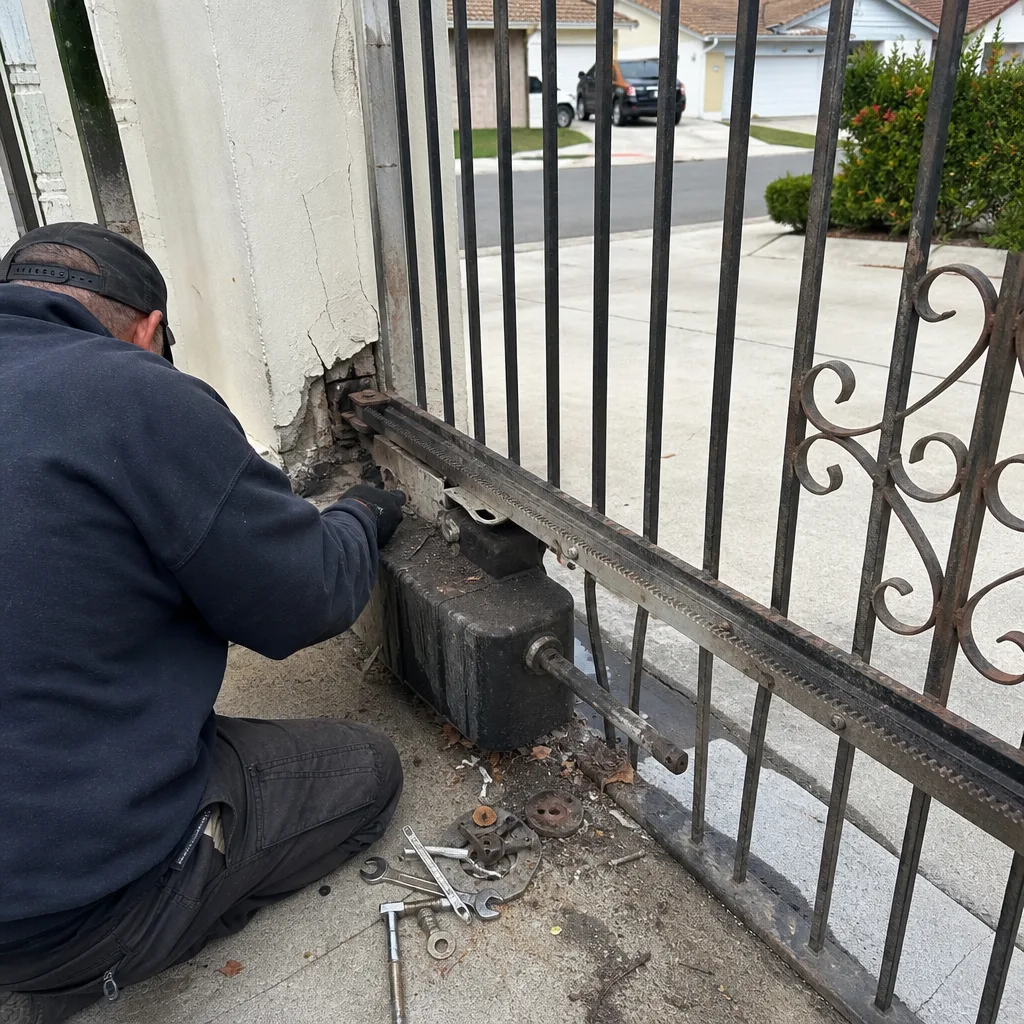 Before
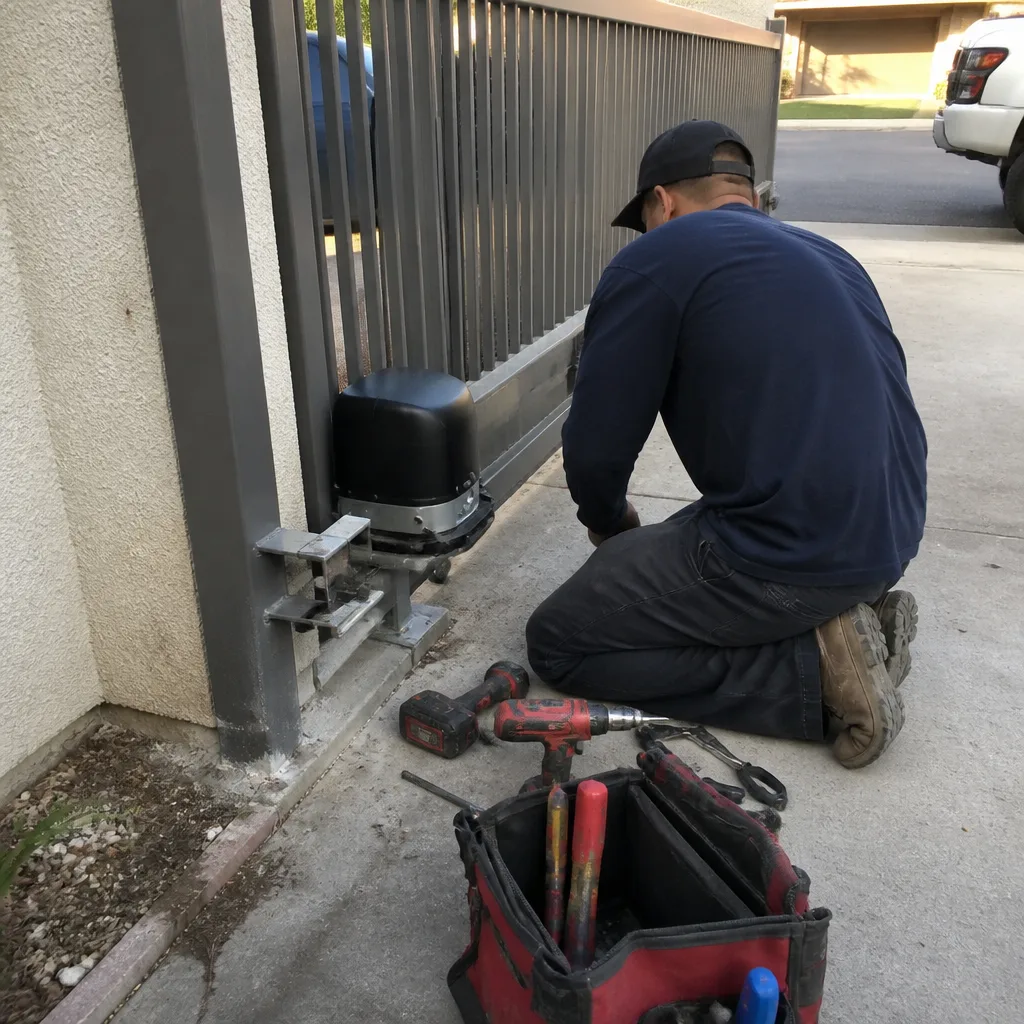 After
After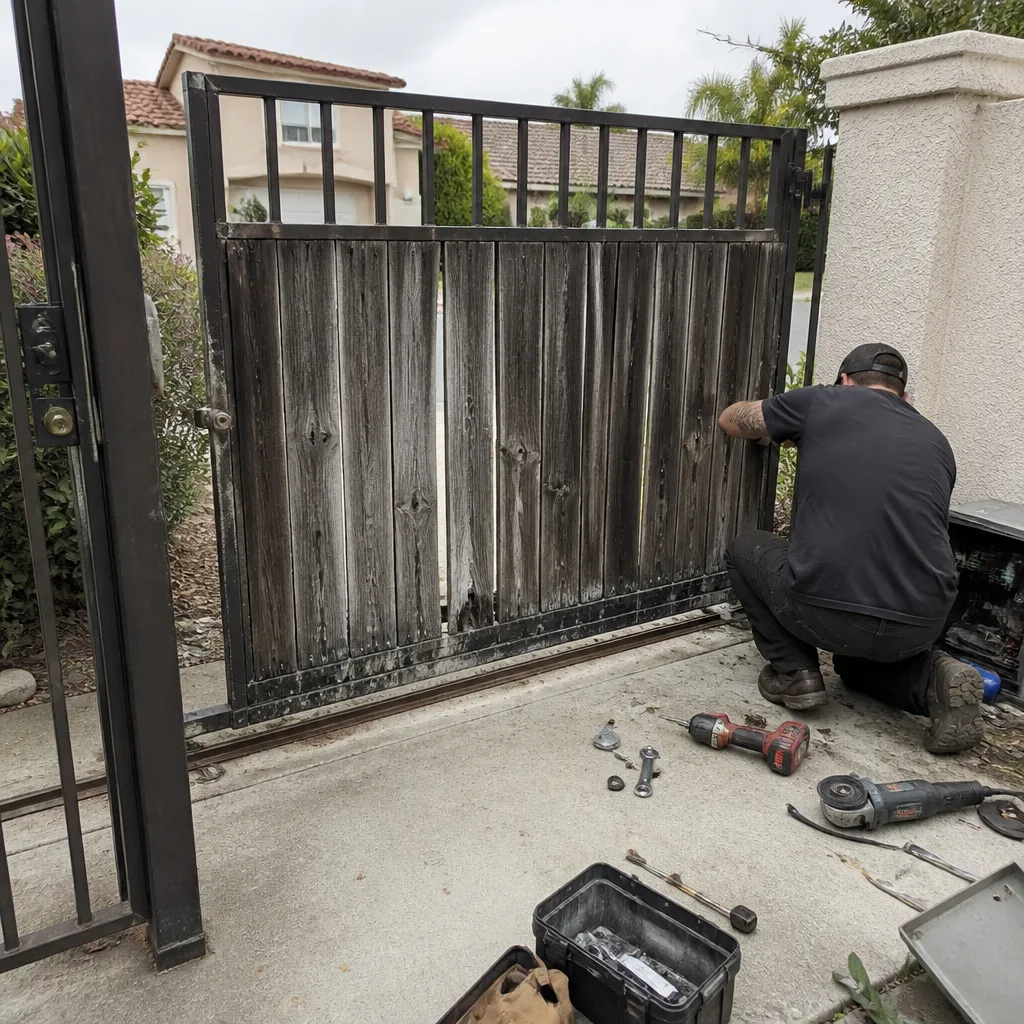 Before
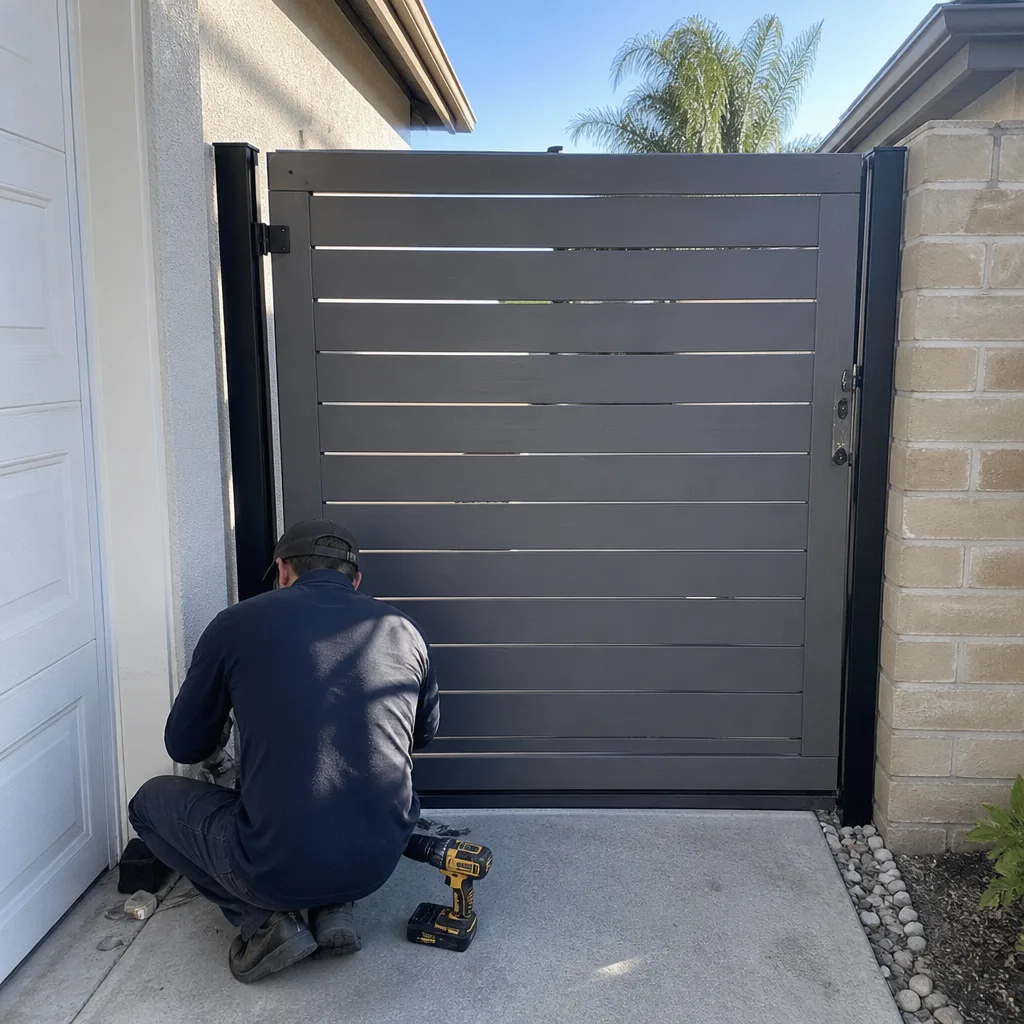 After
After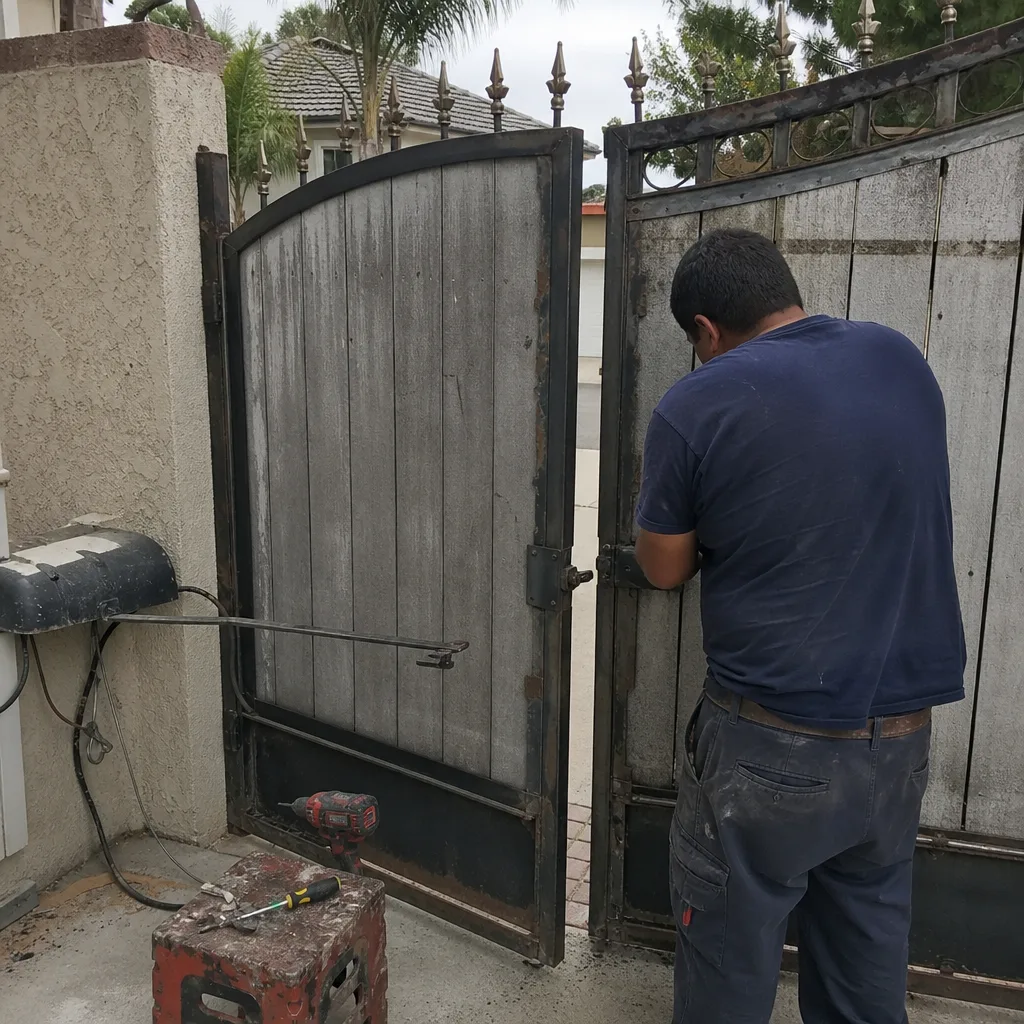 Before
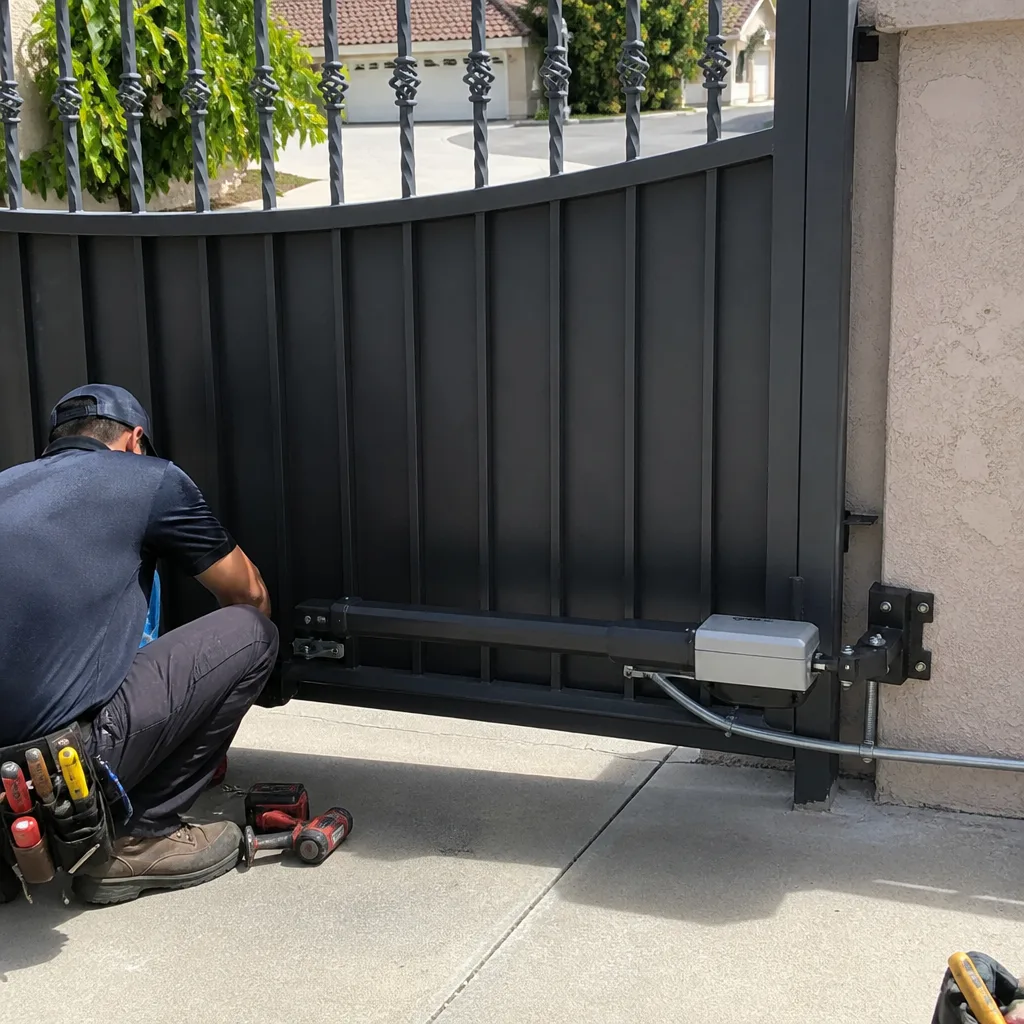 After
After