
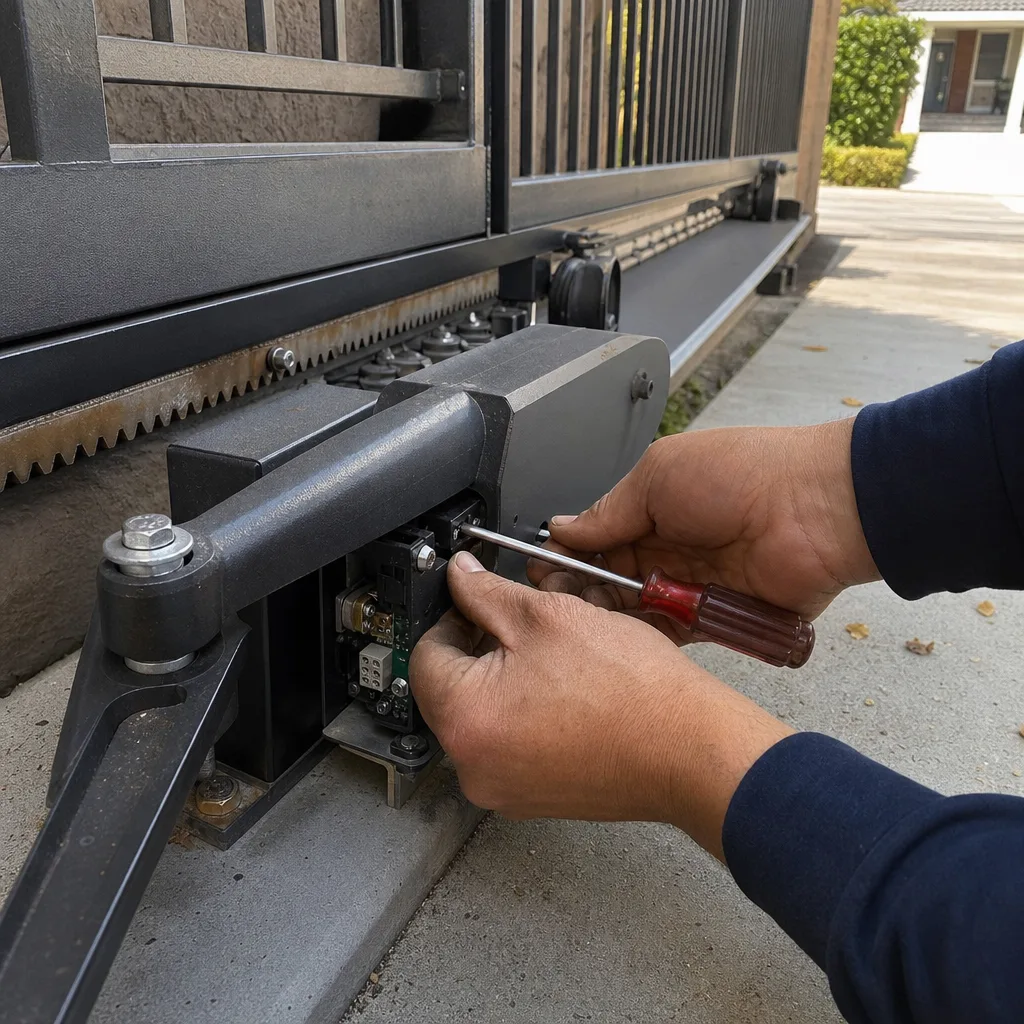
Last updated October 16, 2026
 Wrought iron
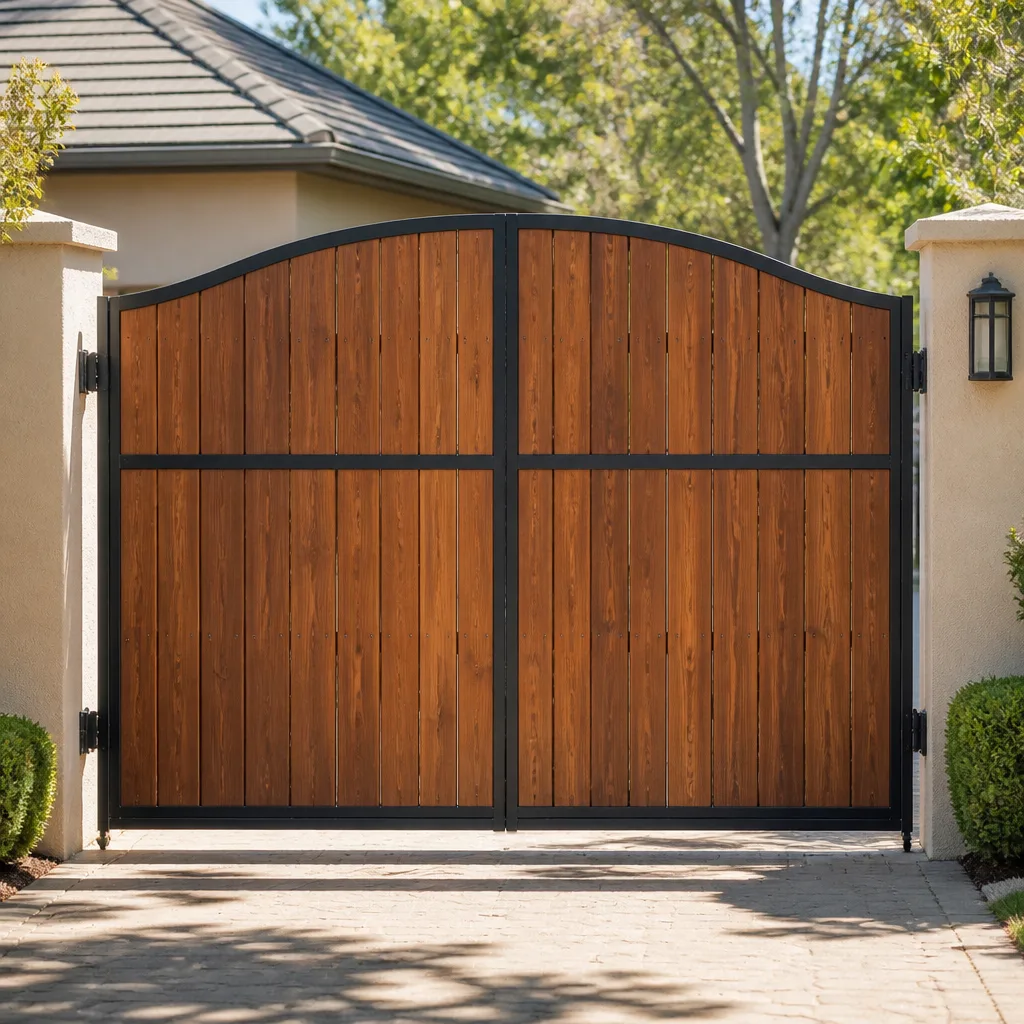 Wood & steel frame
 Farm & ranch
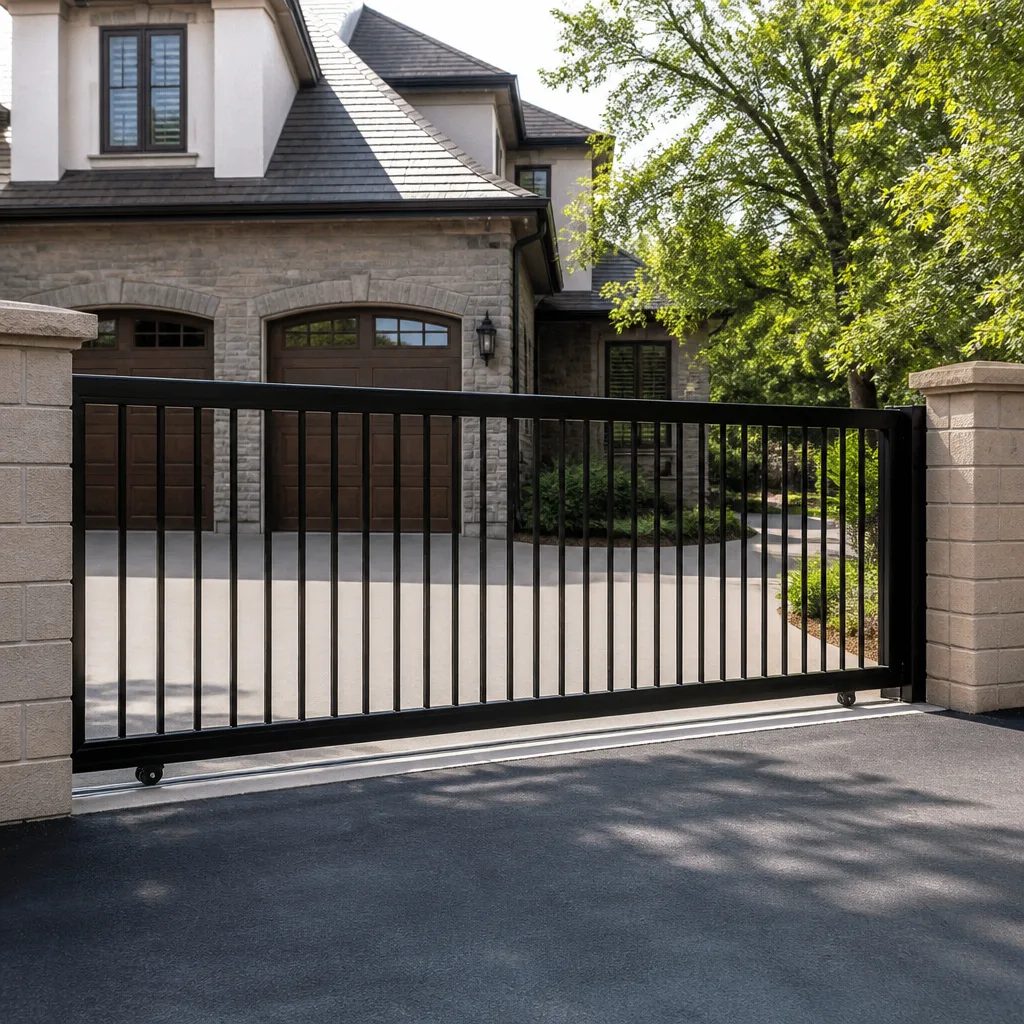 Sliding driveway gates
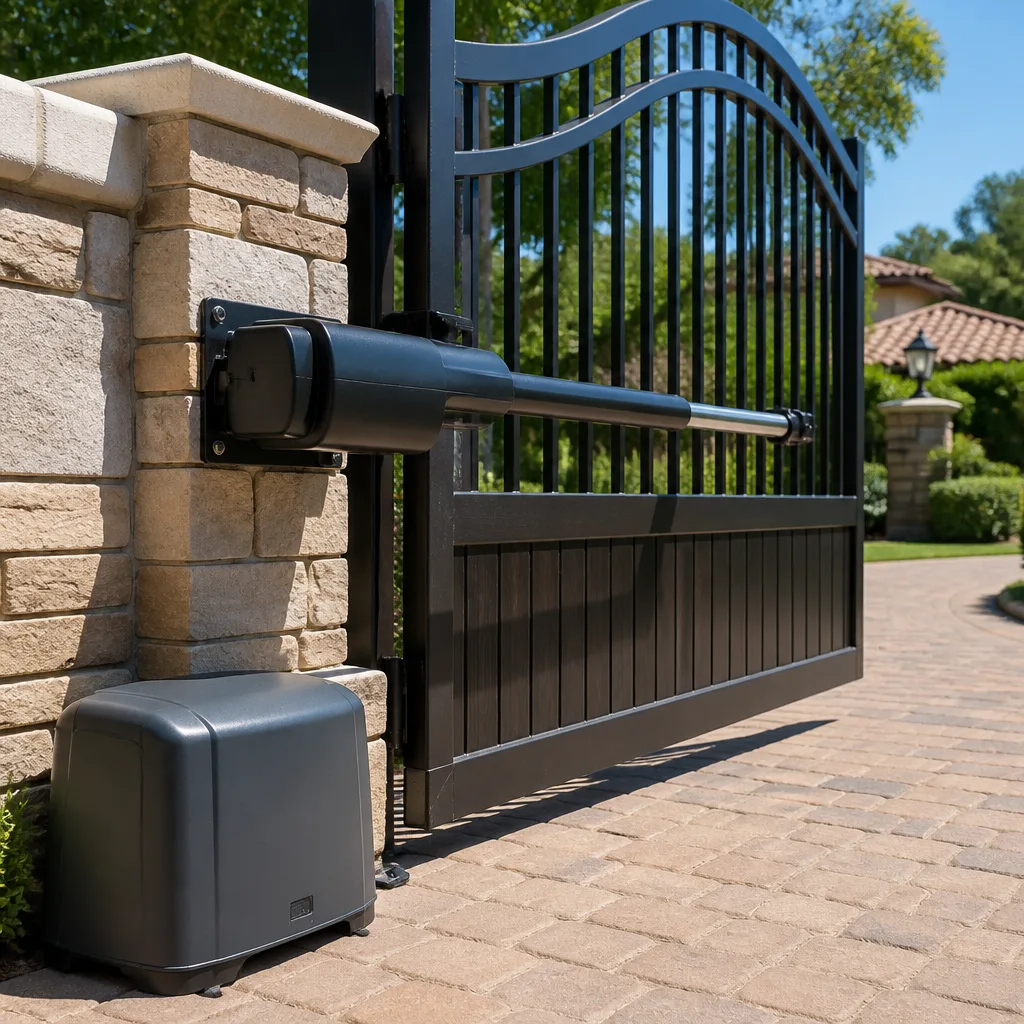 LiftMaster operators
Free on-site gate assessment - hinges, posts, and your LiftMaster or Nice gate operator checked before anything is quoted
The assessment is free and the quote is the invoice.
Get your free estimateGate Repair Maintenance Checklist for Orange County Homeowners
The number-one cause of premature gate opener failure in coastal Orange County isn’t a mechanical defect. It’s salt-accelerated corrosion on components that a $4 can of the right spray could have protected. Drive through San Clemente, Dana Point, Newport Beach, or Huntington Harbour and you’ll see the same story on a thousand gates: rust blooming around hinge bolts, white crust forming on limit-switch housings, and control boards that died years before their rated lifespan because moisture found a seam. This guide is built specifically for Orange County conditions, not generic advice written for someone in Ohio. You’ll learn a maintenance rhythm tied to our actual seasons, the products that hold up in marine air, and the three inspection points that void manufacturer warranties if you skip them.
Quick Answer
A gate maintenance checklist for Orange County homeowners should follow a monthly, quarterly, and annual rhythm built around coastal humidity, Santa Ana wind events, and summer heat. The core tasks are cleaning and lubricating hinges and tracks with a marine-safe product, testing the safety reverse sensors and photo eyes, checking opener gear teeth for salt corrosion, and documenting every service in a written log. Most Orange County gate failures trace back to skipped lubrication in May and June, when marine layer moisture sits on bare metal for 14 hours a day.
Styles & brands we work with
Table of Contents
- Monthly Maintenance Tasks
- Quarterly Maintenance Tasks
- Annual Maintenance Tasks
- Lubrication: What to Use, What to Avoid
- Brand-Specific Self-Diagnostics: LiftMaster, DoorKing, FAAC
- Three Inspection Points That Void Warranties If Skipped
- The OC Seasonal Calendar: Santa Anas, Marine Layer, Heat Peaks
- Keeping a Maintenance Log (and Why It Matters for Resale)
Monthly Maintenance Tasks
Monthly checks take about 10 minutes. They catch the small problems before they become a gate that won’t open at 7 a.m. when you need to leave for work. In our experience across Orange County, monthly consistency matters more than deep quarterly sessions. A gate that gets 10 careful minutes every month almost never needs emergency repair. A gate that gets ignored until it stops moving almost always does.
Here’s what to check every month:
- Photo eye alignment. The photo eyes are the small sensors near the bottom of each gate post. They shoot an invisible beam between them. If anything blocks that beam, the gate should reverse or refuse to close. Wipe both lenses with a dry microfiber cloth. In Orange County’s dry months, dust coats these lenses fast, and a dusty lens looks identical to a blocked beam. If your gate reverses every time it tries to close, this is usually why.
- Physical track inspection. Walk the full length of the track. Look for pebbles, twigs, toys, or landscape debris. After Santa Ana events, eucalyptus bark and palm fronds wedge into tracks more often than any other debris type.
- Hinge bolt check. Look at the hinge bolts where the gate leaf attaches to the post. Orange County’s coastal humidity accelerates rust here. If you see orange streaking or flaking, note it. Don’t tighten a rusted bolt yourself once it’s seized. That’s a job for someone with the right extraction tools.
- Run a full open and close cycle. Stand clear and cycle the gate twice. Listen for any change in sound: a new grinding, a stutter, a lag between pressing the remote and the gate moving. Sound changes are early warning signs. A gate that sounds different this month than last month is telling you something specific.
- Check the manual release. Most openers have a red release handle or key. Pull it once a month and move the gate by hand halfway open and back. This confirms two things: the manual mechanism works, and the gate isn’t binding. A gate that’s hard to move by hand is a gate that’s burning out the opener motor every cycle.
For a deeper look at how these tasks fit into a broader repair context, see our gate repair in Orange County page.
Quarterly Maintenance Tasks
Quarterly maintenance goes beyond the quick monthly walkthrough. These tasks take 30 to 45 minutes and should happen four times a year, but the timing matters more in Orange County than the count. We recommend aligning quarterly checks with the seasonal calendar in the section below rather than spacing them evenly on a generic calendar.
Quarterly Checklist
- Clean and relubricate all hinge pins. Remove old grease with a rag, wipe the pin clean, apply fresh lubricant. In coastal Orange County, old grease traps salt and becomes an abrasive paste. You’re not adding lube to a dirty hinge. You’re replacing contaminated lube with clean lube.
- Inspect all wiring connections at the opener arm and control box. Look for green or white corrosion on terminals. In Newport Beach, Corona del Mar, and Laguna, this corrosion shows up faster than in Anaheim or Orange. If you see it, note it in your log. Don’t spray electrical cleaner on a live board.
- Test the safety reverse under load. Place a solid object like a rolled-up beach towel (something with weight, not a cardboard box) in the gate’s path and close the gate. It should reverse within two seconds of contact. If it doesn’t, that’s a safety issue, not a cosmetic one.
- Check ground clearance. Gate tracks and bottom rails shift as soil moves. In hillside communities like San Juan Capistrano, Coto de Caza, and Trabuco Canyon, clay soil expands and contracts seasonally. A gate that scrapes at the bottom is taking hours off its opener motor life.
- Verify the loop detector if you have one. Many Orange County driveway gates use an induction loop cut into the asphalt to sense vehicles. Test it by driving a car over the loop area and confirming the gate responds. Loops fail silently and often.
If any quarterly check raises a concern you can’t identify, electric gate repair in Orange County is one phone call away. Calder Gate Repair Orange County can diagnose it before it becomes a no-open situation.
Annual Maintenance Tasks
The annual service is the one most Orange County homeowners skip, and it’s the one that prevents the most expensive failures. This is a 60 to 90 minute deep service, ideally performed in October after the summer heat breaks but before the winter rain arrives. October in Orange County gives you dry weather, moderate temperatures, and a gate that’s had a full summer of UV and heat stress.
- Battery backup replacement or test. If your opener has a battery backup system, test it annually by cutting power to the opener and cycling the gate. Batteries in Orange County garages and gate boxes degrade faster in summer heat. A battery that lasted three years in coastal temperatures might last two in Yorba Linda or Rancho Santa Margarita.
- Control board inspection. Look for swollen capacitors, scorch marks, or a burned smell. This is not a repair step. This is an identification step. If you see any of these signs, the board needs replacement or repair. Catching a failing board before it dies means you choose the timing, not the board.
- Full track clean and realignment. Remove all debris, clean the track channel, check for flat spots or scoring, and verify the gate rolls true. Even a quarter-inch misalignment in a sliding gate puts constant side load on the rollers and the opener gear.
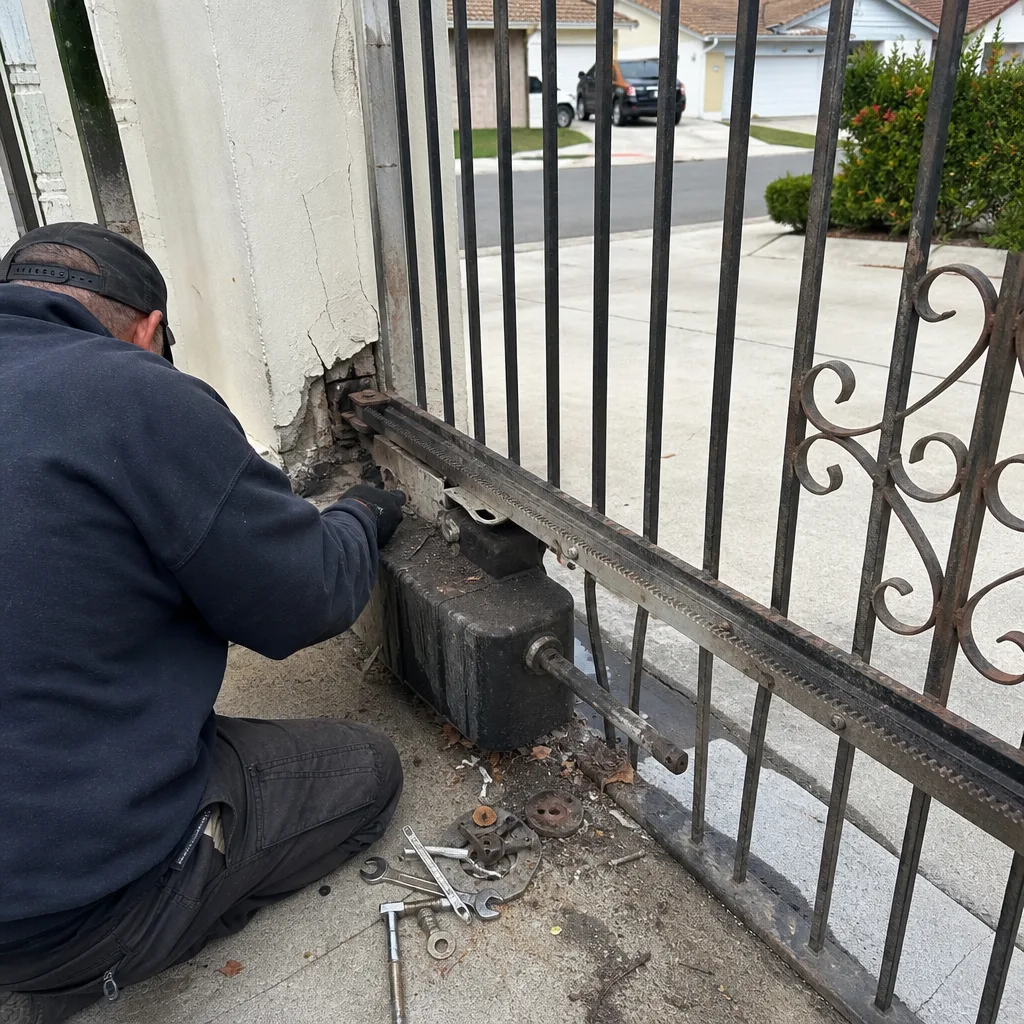
- Opener gear and sprocket inspection. This is where Orange County’s climate does its spite work. Salt air penetrates the gear housing and accelerates tooth wear. We’ve seen gear teeth ground to smooth nubs on eight-year-old openers in San Clemente that would have lasted fifteen years in Aliso Viejo. Sprockets, chains, and plastic gears are all consumables. They’re designed to be replaced. The key is replacing them on schedule, not after catastrophic failure.
- Panel and hardware check on swing gates. Check every bolt, washer, and bushing on the gate panel itself. A loose panel swings differently, changes the load profile, and shortens opener life.
For the opener-specific portion of this annual work, see our guide to gate opener repair in Orange County.
Lubrication: What to Use, What to Avoid
This section alone could save Orange County homeowners thousands of dollars in premature gate replacement. The product you use matters as much as the act of lubricating.
Products That Work in Coastal Orange County
- White lithium grease. The standard for hinge pins, chain drives, and opener screw threads. It clings well, resists water wash-out, and doesn’t attract dust the way heavier greases do. Apply a thin coat after cleaning, not a thick layer on top of dirt.
- Marine-grade corrosion inhibitor (CRC 656 or similar). Spray on exposed metal parts, wiring connections, and the opener housing exterior. This is the $4-can product that prevents $600 board replacements.
- Silicone spray for plastic-to-metal contact points. Safe on nylon rollers, plastic gears, and limit-switch housings. It lubricates without degrading plastic the way petroleum products do.
- Dielectric grease for electrical connections. Applied to plug connectors and terminal blocks. It seals out the marine layer moisture that causes the green corrosion we see on coastal Orange County installations.
Products to Avoid
WD-40 is the most common mistake we see in Orange County. It’s a water displacer and cleaner, not a lubricant. It strips away the protective oil film and leaves bare metal to rust. In a coastal environment, WD-40 on gate hinges accelerates rust rather than preventing it. If you’ve been using it, stop. Clean the part with a proper degreaser and relubricate with white lithium.
Avoid graphite spray on anything near electrical components. Graphite is conductive. A graphite overspray onto a control board creates short circuits. Avoid heavy axle grease on roller bearings. It traps and holds sand. In Orange County, near any beach, sand-laden grease is an abrasive lapping compound.
Brand-Specific Self-Diagnostics: LiftMaster, DoorKing, FAAC
Different openers fail in different ways, and knowing your brand’s tell-tale signs saves time and service costs. These diagnostics require no tools beyond your hands and your eyes.
LiftMaster (Common in Orange County Residential Gates)
LiftMaster residential openers like the LA400 and LA500 series show their age through the remote range first. If your remote only works within 15 feet, when it used to work from the street, check the antenna wire on the control board. It’s been bent, folded, or pulled. Straighten it, point it out through the control box hole, and test again. A second common LiftMaster symptom in Orange County is a gate that stops halfway and reverses, with the courtesy light blinking five times. That’s the force-sensitivity circuit detecting excess load, usually from dirty tracks or lack of lubrication. Clean, lubricate, and test again before assuming the board is bad.
DoorKing (Popular for Larger Driveway Gates in OC)
DoorKing openers, especially the 9150 and 9050 series, are tanks. What kills them in Orange County is not mechanical load but electrical contact failure. If the gate does nothing when you press the remote, but the loop detector works fine, check the three-button station inside the control box. The buttons corrode from marine air. Press each one 20 times rapidly with the power on. If the gate responds, the button contacts were the issue. Clean them with a proper electrical contact cleaner or replace the station. A second DoorKing signature: the gate opens but won’t close. Clean the photo eyes first, then check the reversing-edge switch on the gate leading edge. In coastal Orange County, the rubber edge hardens and cracks, letting water in. A waterlogged safety edge reads as permanently obstructed.
FAAC (Common on Condo and HOA Gates in Orange County)
FAAC openers are sophisticated hydraulic and electromechanical systems, often installed on community gates. Their most common Orange County failure is the capacitor. Symptoms: the gate hums when it should move, or moves slowly and weakly. Capacitors degrade faster in heat, which is why we see more of these in inland Orange County (Santa Ana, Orange, Tustin) than right on the coast. A second FAAC diagnostic: hydraulic fluid level. On FAAC hydraulic operators, a sight glass on the unit shows fluid level. If it’s below the minimum line, the gate will drift or fail to hold closed. Low fluid almost always means a leak somewhere in the system. Adding fluid without finding the leak is temporary.
These are triage steps, not repair instructions. Gates are heavy and openers carry tension. For any problem beyond a cleaning or a button-press fix, see our gate opener repair in Orange County page and call a trained technician.
Three Inspection Points That Void Warranties If Skipped
Most Orange County homeowners don’t read the warranty fine print until they need it. In our experience, three specific inspection and maintenance points appear in manufacturer warranty language as conditions of coverage, and skipping them gives the manufacturer a legitimate denial reason. These are not suggestions.
- Safety reverse system testing. LiftMaster, DoorKing, FAAC, BFT, and nearly every other manufacturer require documented periodic testing of the safety reverse and obstruction-detection system. If the reverse function fails and causes damage or injury, the manufacturer’s first question is “When was it last tested?” No documentation means no coverage.
- Visible lubrication of the drive mechanism. Most warranty text covers “properly maintained equipment.” In practice, that means the opener screw, chain, or belt shows evidence of lubrication at service intervals. A bone-dry screw drive or a rusted chain is the fastest way to have a warranty claim kicked back.
- Photo eye and safety edge verification. These are safety components, not convenience features. Manufacturers require them to be aligned, clean, and functional at all times. Disconnecting a photo eye because it’s “annoying” voids the warranty on the entire opener, not just the sensor. In Orange County’s harsh sun and salt air, these components fail more often than the motors, which makes this inspection point the most commonly skipped and the most commonly cited in warranty denials.
Your written maintenance log from the section below is the evidence you need if a warranty claim comes up. “I did it” doesn’t hold up. “Here’s the dated log” does.
The OC Seasonal Calendar: Santa Anas, Marine Layer, Heat Peaks
Generic maintenance calendars tell you to “service your gate in spring and fall.” Orange County doesn’t have spring and fall in any meaningful way. We have three seasons that each create a distinct failure pattern.
Santa Ana Season: September through November
Santa Ana winds bring two threats to Orange County gates: airborne debris and static electricity. Wind gusts in the 40 to 60 mph range in canyons like Silverado, Modjeska, and Ortega strip leaves, branches, and dust into every track and roller. Static builds on the gate panels in dry air, and that static draws dust to the photo eye lenses. After any significant Santa Ana event, check your track for debris within 48 hours. A jammed roller during a Santa Ana is often the start of a chain of damage: the opener fights the jam, overheats, and fails a week later.
Marine Layer Season: May through July
“May Gray” and “June Gloom” are not just moods. They’re 14-hour stretches of 90%+ humidity with minimal sun. In coastal Orange County, from Seal Beach down through Laguna Beach and San Clemente, this is the most corrosive window of the year. Bare metal gets wet every night and never fully dries. This is when you need that marine-grade corrosion inhibitor applied. This is also when control boards short out from condensation inside the box. If your control box has no desiccant pack or vent plug, add one before May.
Summer Heat Peaks: August and September
Inland Orange County gates run in 95 to 105 degree heat for weeks. In Yorba Linda, Anaheim Hills, and Rancho Santa Margarita, the control box interior can reach 130 degrees by noon. Capacitors and power supplies are rated for operating temperatures, and running at the edge of that rating shortens life. The mitigation: make sure the control box has shade as much as possible (a simple sun shade made of wood or metal, held off the box by a few inches for airflow), and test the opener at the cooler part of the day if you need to run maintenance.
For the same seasonal logic applied to electric gate systems specifically, our electric gate repair in Orange County page covers it in depth.
Keeping a Maintenance Log (and Why It Matters for Resale)
A written maintenance log serves three purposes in Orange County: warranty claims, resale disclosure, and repair efficiency. Every homeowner should keep one. It doesn’t need to be elaborate. A simple notebook in the garage or a note on your phone works.
What to Record
- Date of every maintenance task and what was done
- Product used (brand and type)
- Any observations: unusual sounds, slow response, corrosion noted
- Any part replacements, with date and mileage if applicable
- Service records from professional visits
Why It Matters for Resale
Orange County homes sell all year, and a gate is part of the property. When you sell, the buyer’s inspector will look at the gate, the disclosure form asks about known defects, and any buyer who’s just spent $1.2 million in Lake Forest is going to ask whether the gate works. A maintenance log transforms “it works now” into “it’s been maintained properly for eight years, here’s the record.” In our experience, that single document often saves $500 to $800 in pre-close negotiations over gate condition. It also tells the next owner exactly what products to keep using, which prevents them from making the WD-40 mistake we described earlier.
When professional work is needed, Calder Gate Repair Orange County documents every repair with a written record: what was found, what was done, what was charged. Keep those records in the same log. They’re the strongest evidence of proper maintenance a future buyer or warranty adjuster will ever see.
Common Mistakes to Avoid
- Using WD-40 as a lubricant. In Orange County’s marine air, this strips protective oil and accelerates rust on hinge pins and chains. It’s the most common gate maintenance mistake we encounter.
- Ignoring photo eye dust in summer. The dry months of July through November coat sensors with fine dust that mimics beam obstruction. Cleaning takes 10 seconds.
- Lubricating dirty parts. Adding fresh grease on top of old, salt-contaminated grease creates an abrasive paste in coastal communities like Newport Beach and Dana Point.
- Testing the safety reverse only once. Safety edges and photo eyes degrade over time, especially in UV exposure. A system works until it doesn’t. Test monthly, not annually.
- Running the gate after a Santa Ana without checking the track first. Debris jams the rollers, the opener fights the jam, and the motor or gear pays for it.
- Postponing opener gear replacement. If you can hear a change in the operating sound, the gear is talking to you. Waiting until it fails usually means the gate won’t open manually either, and you’re calling for emergency service instead of scheduled service.
See the difference
 Before
 After
After Before
 After
After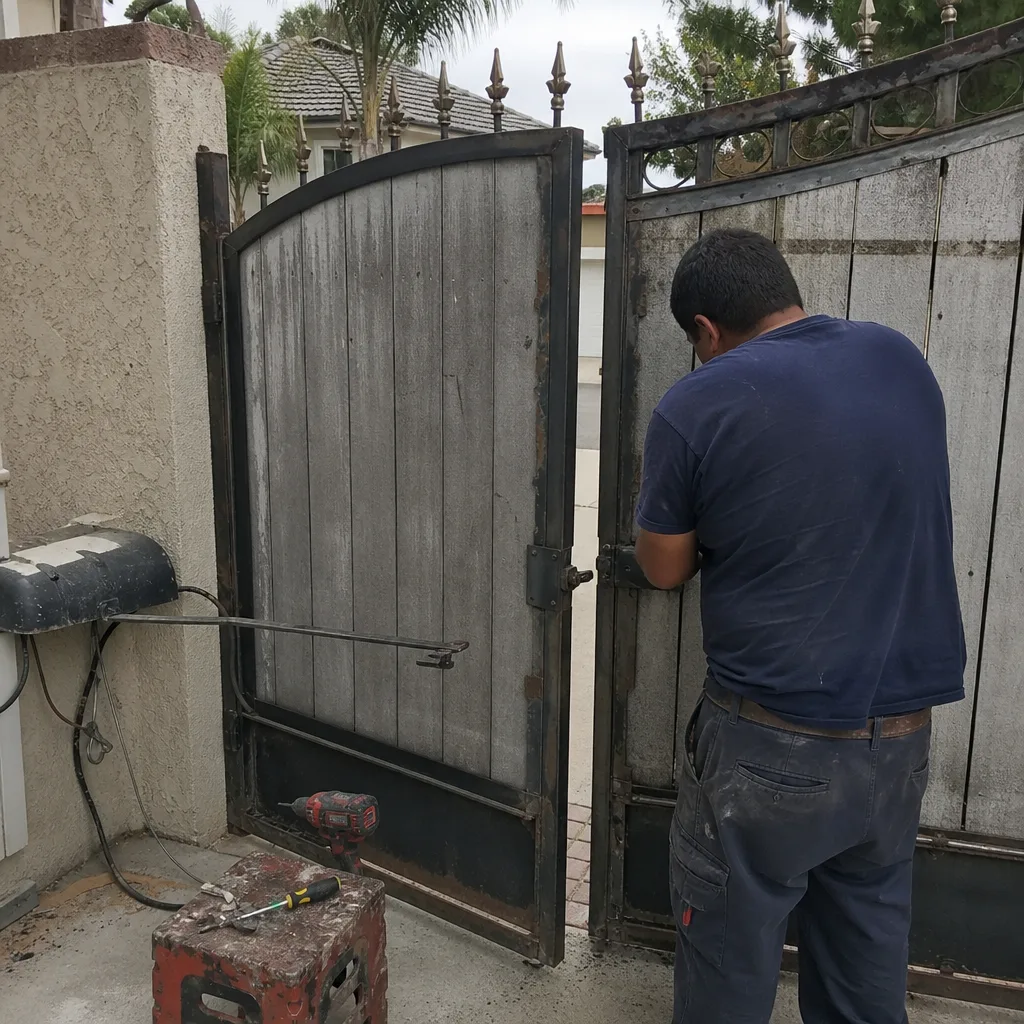 Before
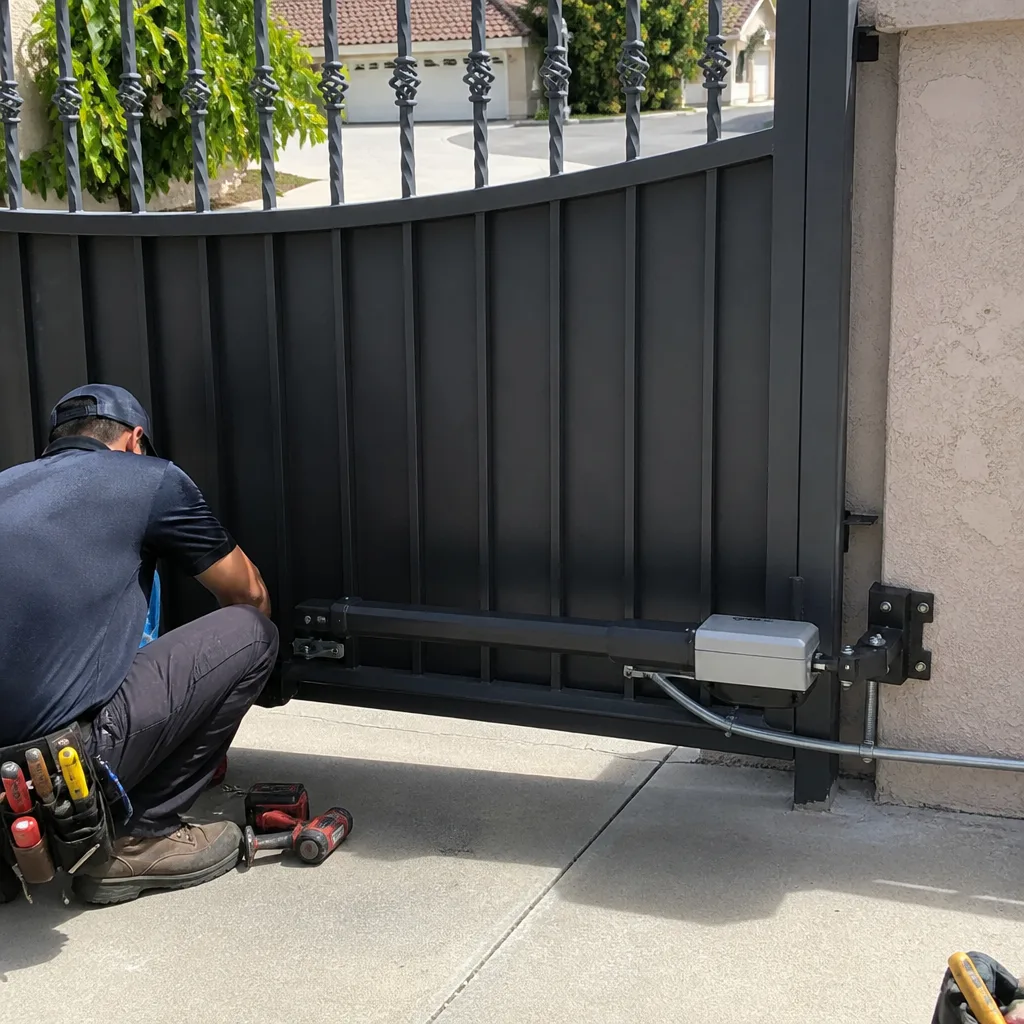 After
AfterWhen to Call a Professional
Some issues are not DIY territory. A gate that jars, shakes, or binds when moving. A control board with visible scorching or swollen components. A hydraulic FAAC unit with low fluid. Any electrical issue where you see exposed wire or smell burning. A gate that’s off its track after a Santa Ana. A safety reverse that doesn’t work, period. None of these are “spray it and see” situations. Calder Gate Repair Orange County offers free estimates in Orange County, and every job includes a written price before any work starts. Call (831) 603-6424 and talk to a live person, day or night. If it’s not an emergency, we’ll schedule a time that works and show up when we say we will.
Frequently Asked Questions
In Orange County’s climate, lubricate hinge pins and chains quarterly, and apply a marine corrosion inhibitor to exposed metal before the May Gray season. Coastal homeowners within five miles of the ocean should do it every two months from May through July.
White lithium grease is the best all-purpose hinge and chain lubricant for coastal Orange County because it resists water wash-out and doesn’t attract sand. Pair it with a marine-grade corrosion inhibitor like CRC 656 or equivalent on exposed metal parts.
In inland Orange County, afternoon heat can cause thermal shutdown in control boards running near their temperature limit. The problem usually indicates an overheating board, a failing capacitor, or restricted airflow inside the control box. Note the time of failure and call for diagnosis.
Yes. Place a rolled-up beach towel or a filled two-liter bottle in the gate’s closing path and close the gate via remote. The gate should contact the object and reverse within two seconds. If it doesn’t reverse, or reverses only after pushing the object several feet, the safety system needs service.
Yes. Coastal Orange County’s marine layer creates 14-hour stretches of near-saturated humidity from May through July. That moisture penetrates control box seams and electrical connectors, causing corrosion that shortens component life by three to five years compared to inland installations.
Repair is usually the better call if the opener is under 10 years old and the failure is confined to a single component like a gear, capacitor, or photo eye. Replacement makes sense when the board has failed and the opener is out of warranty. A trained technician can tell you in one visit whether your LiftMaster, DoorKing, or FAAC unit is worth saving. Call (831) 603-6424 for a free estimate from Calder Gate Repair Orange County.
The Bottom Line
Orange County gates fail differently than gates anywhere else. Salt air, Santa Ana debris, and summer heat peak create a predictable pattern, and the maintenance cadence in this guide directly counters it. Do the 10-minute monthly checks. Lubricate with the right products, and never with WD-40. Test your safety systems. Document everything. Those four habits prevent the vast majority of gate failures in Orange County, and when a failure does happen, you’ll have a log that protects your warranty and your resale value, and a single phone call to (831) 603-6424 connects you with a live person who can schedule the repair from Calder Gate Repair Orange County home base.
Written by Nico Alvarez, Owner at Calder Gate Repair Orange County, serving Orange County since 2009.