
Last updated October 16, 2026
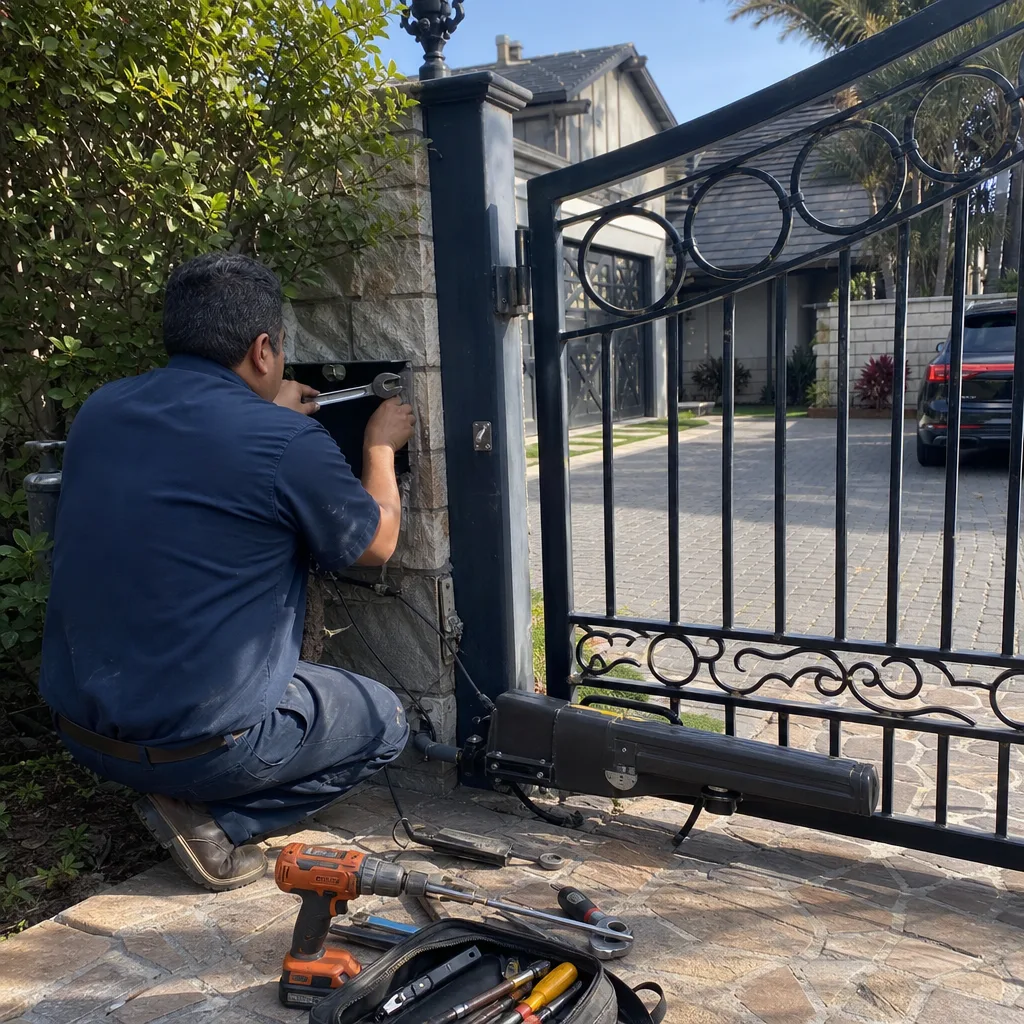
 Wrought iron
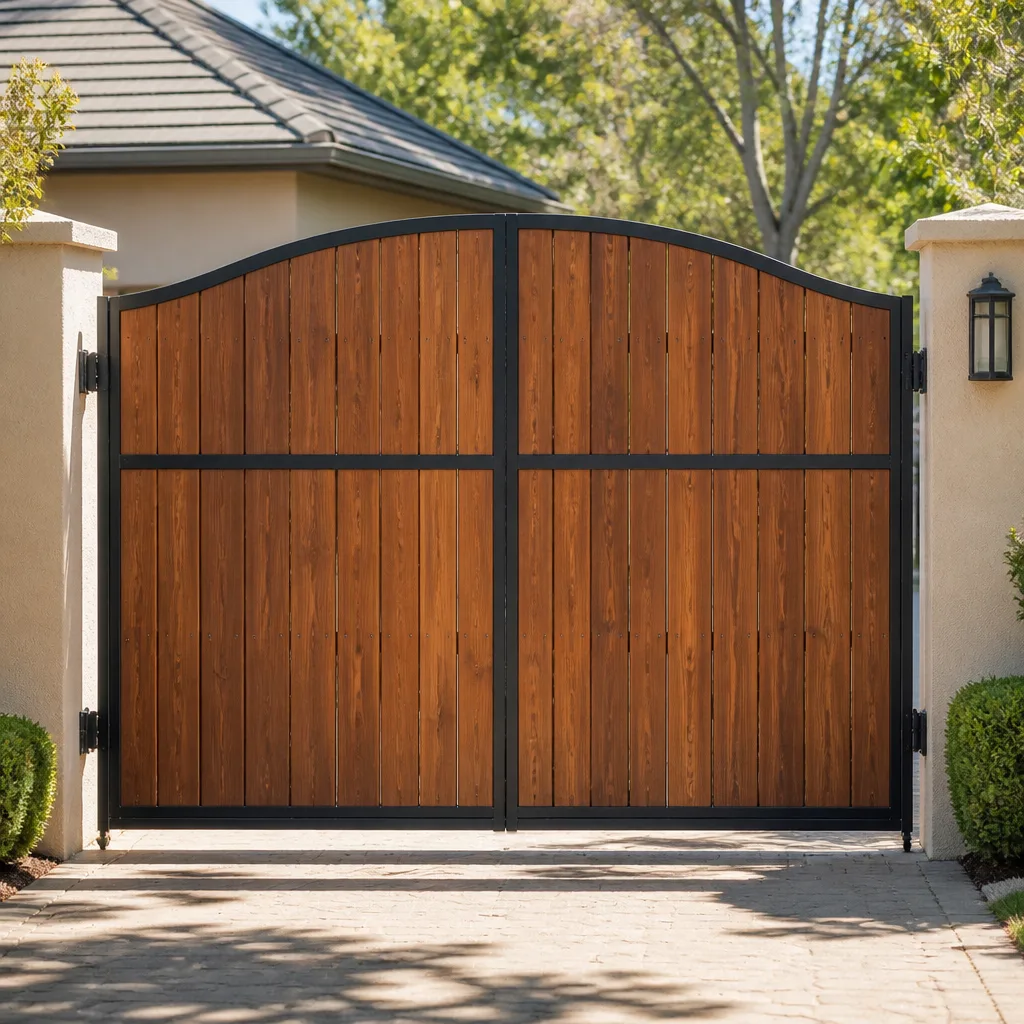 Wood & steel frame
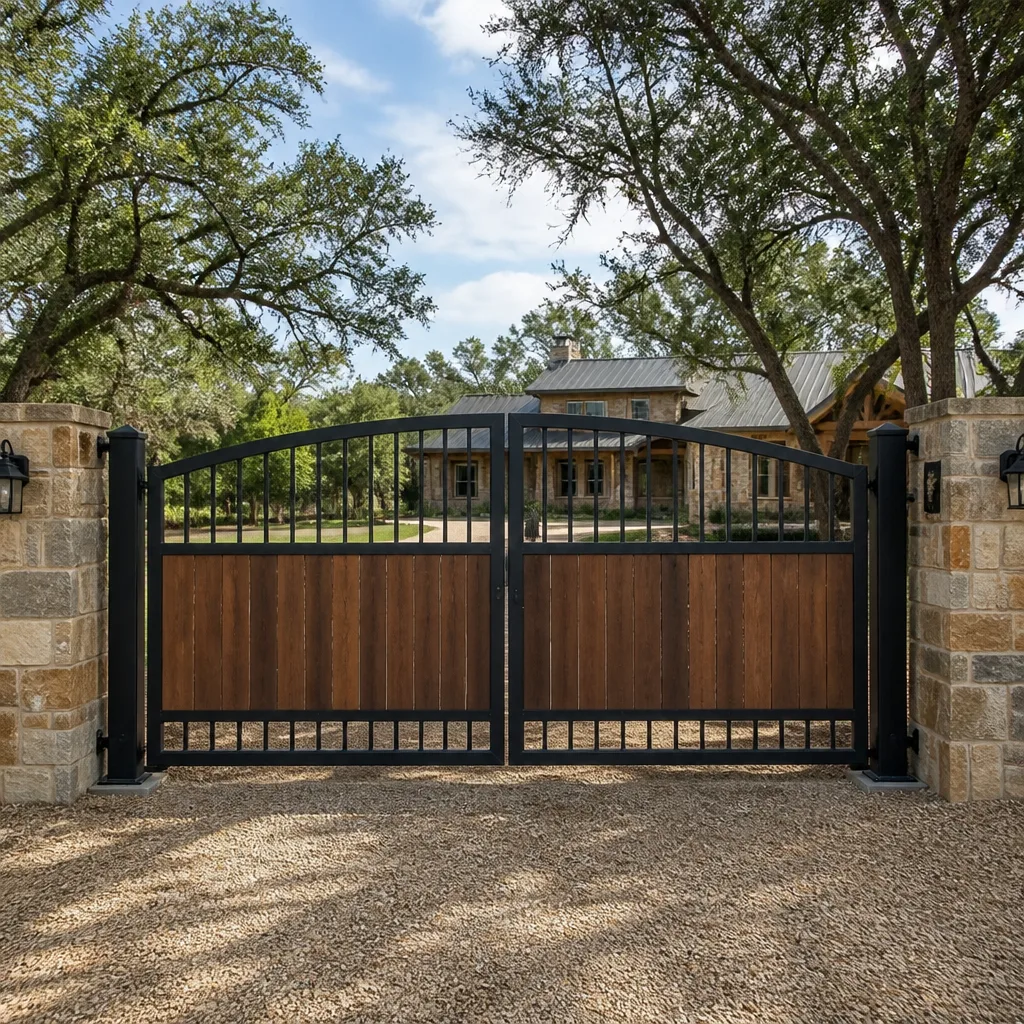 Farm & ranch
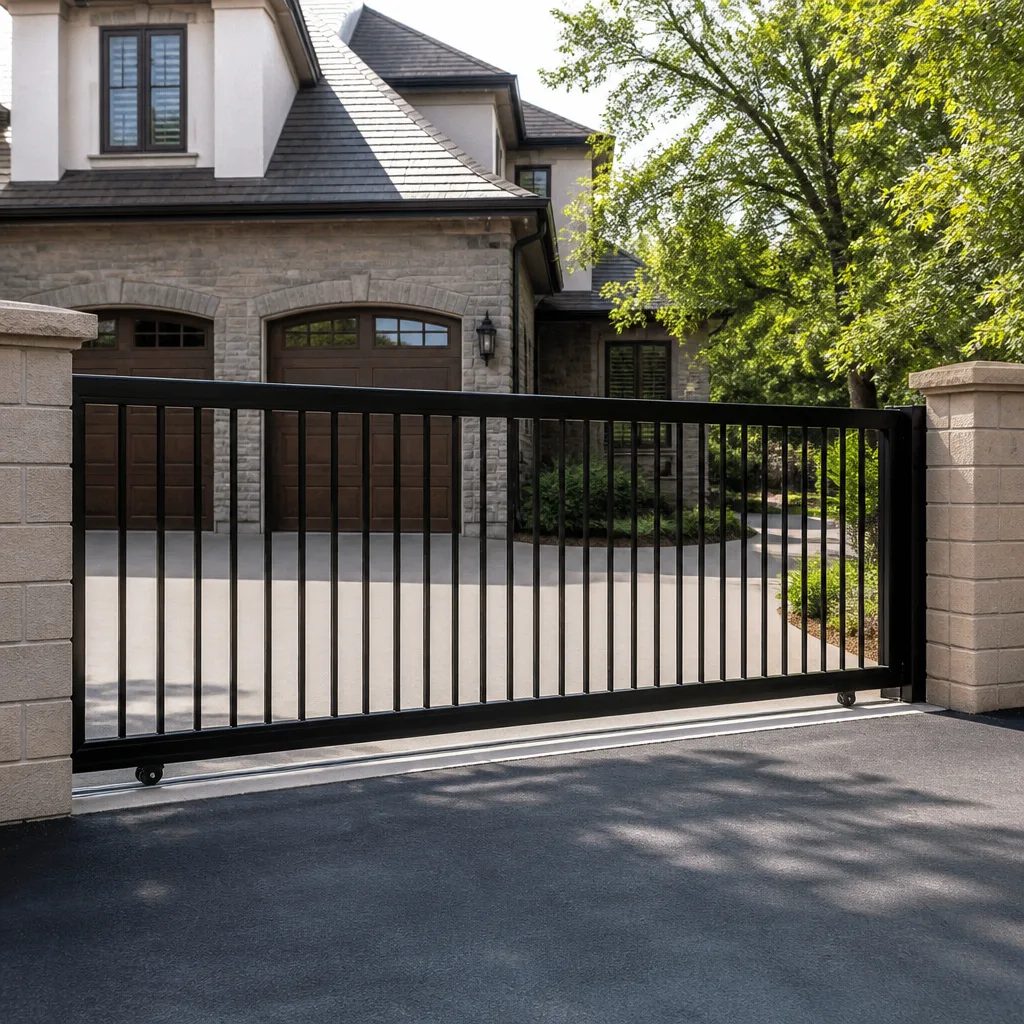 Sliding driveway gates
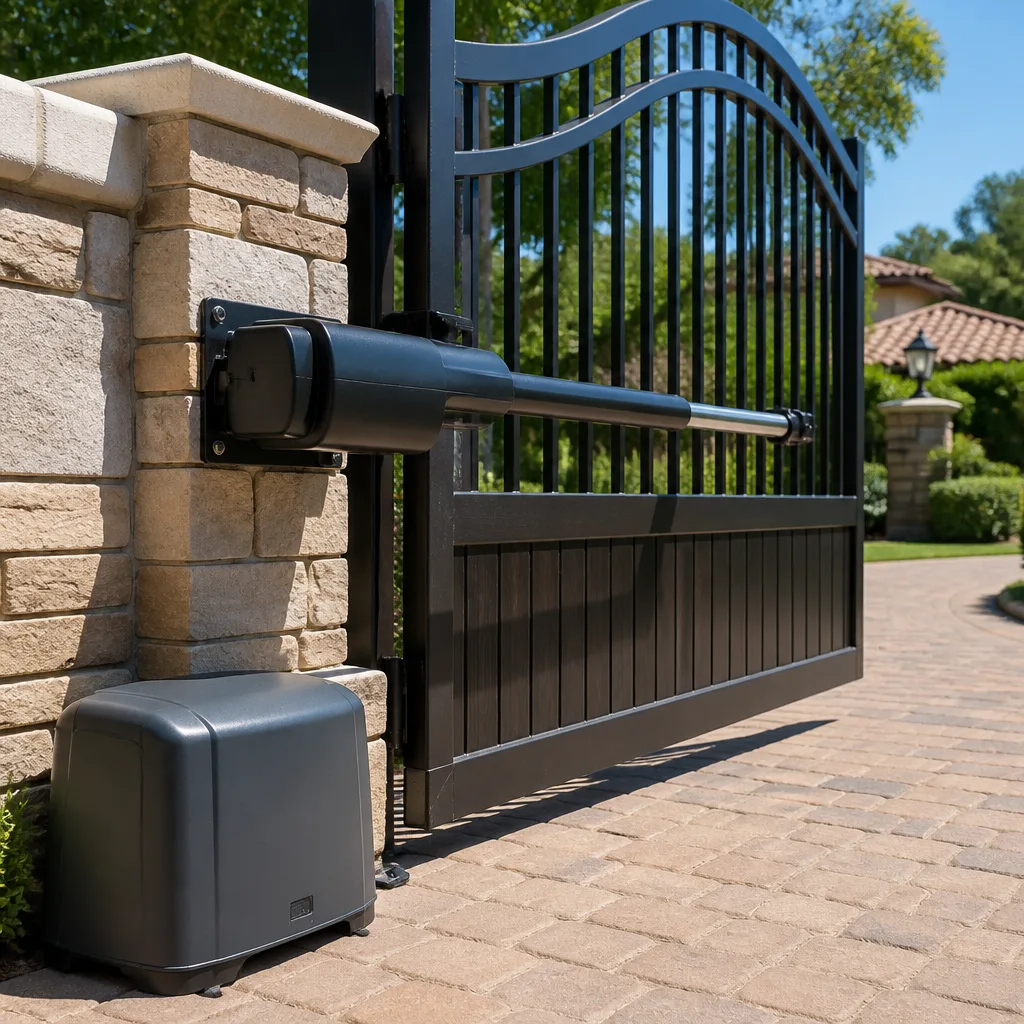 LiftMaster operators
Free on-site gate assessment - hinges, posts, and your LiftMaster or Nice gate operator checked before anything is quoted
The assessment is free and the quote is the invoice.
Get your free estimateGate Repair Warning Signs: A Orange County Homeowner’s Reference Guide
Here’s something most Orange County homeowners don’t realize: a gate that hesitates for exactly two seconds before moving is more likely to become an emergency repair in the next 30 days than one that makes a grinding noise. That hesitation usually signals electrical overload, not a simple mechanical fix, and most visual inspection guides miss it entirely. This reference guide ranks gate warning signs by failure urgency and estimated repair cost, not by how dramatic they sound. You’ll learn which signs mean “call tonight,” which ones can wait a few weeks, and which ones just need a note in your phone. We’re writing this from the perspective of a Orange County gate repair company that sees these patterns every single week across coastal and inland neighborhoods.
Quick Answer
The most urgent gate repair warning signs in Orange County are electrical: a gate that hesitates before moving, a remote that works only at close range, or a breaker that trips more than once a month. These indicate overload, failing capacitors, or wiring damage and typically escalate to failure within 30 days. Mechanical issues like grinding sounds or sagging are slower-moving problems that cost less to fix if caught within the first two weeks. Most gate opener repairs in Orange County run $215 to $485 before parts, depending on the component and opener brand.
Styles & brands we work with
Table of Contents
- Tier 1: Fix This Week – The Five Warning Signs That Precede Failure by 30 Days or Less
- Tier 2: Schedule Within 30 Days – Mechanical Signs That Get More Expensive the Longer You Wait
- Tier 3: Watch and Log – Cosmetic and Environmental Signs to Track, Not Panic Over
- The Five Electrical Warning Signs Most Visual Inspection Guides Completely Miss
- How Orange County’s Climate Changes What Warning Signs Look Like: Coast vs. Inland
- Warning Sign Patterns by Opener Brand: What Your Specific System Is Telling You
- When to Call Tonight vs. Call Tomorrow: The Decision Standard
- What Orange County Gate Repairs Actually Cost, by Warning Sign
Tier 1: Fix This Week – The Five Warning Signs That Precede Failure by 30 Days or Less
In our experience across Orange County, these five signs are the ones that turn into “my gate won’t open at all” calls within a month. Homeowners often dismiss them because the gate still works most of the time. That’s exactly the trap.
1. The Two-Second Hesitation Before Movement
You press the remote or the keypad. Nothing happens for a beat or two. Then the gate moves normally. That delay is the control board or the capacitor struggling to deliver start-up current. In Orange County’s inland heat zones like Anaheim Hills or Rancho Santa Margarita, capacitors degrade faster due to sustained high temperatures inside the opener housing. The hesitation is your capacitor telling you it’s nearly done.
Why it matters: A failing capacitor that goes ignored usually takes the control board with it when it finally dies. That’s a $295 to $540 repair instead of a $95 to $180 capacitor replacement.
2. Remote Range Dropping to Under 20 Feet
When your remote only works when you’re practically at the gate, something is degrading. It could be the receiver antenna, RF interference from a new nearby device, or the opener’s receiver board losing sensitivity. Orange County neighborhoods with dense new construction (think Irvine’s newer villages or Ladera Ranch) see this more often due to signal clutter from smart home devices, security cameras, and even LED landscape lighting on the 433MHz band.
What to do: Replace the remote battery first. If range doesn’t recover, call a gate repair specialist. Do not keep pressing the button from farther away; it doesn’t help and it masks the actual fault.
3. Breaker Tripping More Than Once a Month
A gate opener that trips its breaker repeatedly is flagging an electrical fault. Moisture intrusion into an improperly sealed junction box is the most common culprit in Orange County’s coastal microclimates. Salt air accelerates corrosion on wire connections in places like Huntington Beach, Corona del Mar, and San Clemente. Inland, the cause is more often a failing motor winding drawing excess current.
Crucial safety note: Do not repeatedly reset the breaker and keep using the gate. This is how motors overheat and fail catastrophically. A tripping breaker is a warning sign you should address within the week. If the breaker trips when the gate is mid-cycle and leaves the gate stuck open, that’s a security risk tonight, not later this month.
4. Gate Stops or Reverses Mid-Cycle Without Obstruction
You watch the gate start to open, then stop halfway or reverse back. There’s nothing in the way. This is frequently a limit switch problem (the small sensor that tells the gate when to stop), a failing obstruction sensor, or the control board misreading feedback from the motor. On FAAC openers, this pattern often points to the encoder. On LiftMaster systems, it’s usually the travel module or the limit assembly.
Left alone, this problem gets worse because the gate slams harder when it does reach its stops, putting additional stress on the gear train and hinges.
5. Burning Smell From the Opener Housing or Motor
This is the one warning sign nobody should debate. A burning smell from any gate component means overheating. The motor windings may be shorting, the transformer may be failing, or a capacitor may be leaking electrolyte and heating up. Turn the opener off at the breaker and stop using the gate.
Call tonight, not tomorrow. An overheating gate component is the closest thing to an imminent fire risk you’ll encounter with a gate system, aside from exposed wiring.
Tier 2: Schedule Within 30 Days – Mechanical Signs That Get More Expensive the Longer You Wait
These signs are mechanical, which means they worsen on a predictable timeline and do not typically cause immediate failure. But they do become more expensive to repair the longer you ignore them. A grinding wheel bracket that costs $160 to address today can become a $900 gate panel replacement in eight months.
Grinding or Metallic Scraping While the Gate Moves
Grinding is the sound of metal rubbing on metal where metal shouldn’t be rubbing. Usually it’s a worn wheel running against a damaged track, or a chain running loose across the drive sprocket. Some gate openers use a rack-and-pinion design; when the rack teeth wear unevenly, the pinion chatters and grinds.
Homeowners in Orange County’s canyon areas (Silverado, Modjeska, Trabuco) hear this more often because dust and grit from unpaved driveways accelerates track and wheel wear. If the grinding pauses when the gate pauses and resumes when it moves, it’s mechanical. If it happens only when starting, it could be the capacitor area.
Visible Sagging or Dragging Across the Driveway
A gate leaf that drags on the ground is fighting gravity and friction every single cycle. This places enormous load on the opener motor, which responds by drawing more current. Over a period of months, this overworks the motor and shortens its life. Orange County’s clay-heavy soils in places like Orange, Villa Park, and parts of Fullerton shift noticeably after rain events, and that soil movement can knock gate posts out of alignment enough to cause visible dragging.
Fixing an alignment issue early is typically a hinge, wheel, or post adjustment under $250. Letting it drag for six months frequently means bent hinges, a damaged wheel track, and often a failing opener motor on top.
Gate Leaf Feels Loose When You Push on It (Manual Test)
With the opener disengaged (most systems have a manual release), push the gate leaf gently. If it wobbles or moves more than an inch or two at the far end when you apply light pressure, the hinge bearings or the post itself are losing integrity. In coastal Orange County neighborhoods like Laguna Beach or Dana Point, salt air corrodes mild steel hinges faster than anywhere else in the county. That corrosion is quiet. You won’t hear it. But the wobble tells you it’s happening.
Increasing Noise During Cold Snaps or After Rain
Orange County gets just enough weather to expose weak points without giving homeowners a long enough break to forget about them. When a gate gets louder after rain or on cold mornings, it’s usually one of two things: lubricant washed away or metal contracting enough to reveal misalignment. Tracking when the noise appears, and whether it fades after the gate cycles a few times, is the kind of observation that helps a technician diagnose quickly.
Tier 3: Watch and Log – Cosmetic and Environmental Signs to Track, Not Panic Over
Not every change in your gate warrants a service call. These signs are worth noting in your phone, along with the date you first noticed them, or browse our more guides & resources for deeper maintenance help. If they change, escalate. If they don’t, keep an eye on them at your next lubrication cycle.
Light Surface Rust on the Gate Frame (Not the Track or Hinges)
Surface rust on the gate leaf itself is cosmetic, not structural, in most cases. It appears faster within three miles of the coast because salt spray accelerates oxidation. Inland Orange County gates fade and chalk from UV exposure more often than they rust. Neither pattern is urgent. Record it, photograph it, and plan to address it when you next paint or refinish.
What you should not ignore is rust on the track, on hinges, or on the opener’s mounting hardware. Rust in those locations is a structural and mechanical issue with a much faster failure timeline.
Keypad Buttons Requiring Harder Presses
If the gate still responds every time but you’re pressing the keypad harder than you used to, the keypad’s membrane switch is wearing out. It’s annoying, not urgent. Replacement keypads are available for all major brands and typically run $75 to $150 installed. Log it. Replace it when it starts missing entries.
Small Cracks in the Gate Leaf’s Powder Coat or Paint (Not in Welds)
Cracks in the finish are cosmetic unless they’re at a weld joint. A crack in the powder coat over a welded corner could be purely aesthetic, or it could be the first visible sign of weld fatigue. Check the location. Weld cracks are structural; finish cracks in the middle of a panel are not.
The Five Electrical Warning Signs Most Visual Inspection Guides Completely Miss
Most gate maintenance guides tell you to look for rust, listen for grinding, and check the wheels. Those are fine. But the majority of catastrophic gate failures we see in Orange County are electrical, and the warning signs are behavioral, not visual. Here are five that matter.
1. Remote Range Reduction
Covered in Tier 1, but worth restating: a remote that used to work from the street and now only works from the driveway is an electrical signal problem. Could be the receiver, the antenna, or interference. It is not a battery problem if you’ve already replaced the battery and the range didn’t recover.
2. Inconsistent Response to the Same Button Press
Same remote, same distance, same spot: some days the gate opens on the first press, some days it takes three. This intermittency is the classic signature of a failing receiver board, a loose antenna connection, or a control board with cold solder joints. It’s easy to dismiss as “the remote being finicky,” but intermittent electrical behavior that worsens over time is progredient. It gets worse, not better.
3. Tripped Reset Patterns
If your opener has a reset button or you’ve had to reset the breaker, pay attention to the timing. Does it trip after heavy rain? That’s moisture ingress. Does it trip only on hot afternoons? That’s thermal overload. Does it trip when both cars are coming and going in quick succession? That’s fine – chained cycles on a hot day can trip a marginal breaker. But a pattern is not random, and any pattern that repeats more than once a month warrants a service call.
4. LED Indicator Light Colors You Haven’t Seen Before
Many gate opener control boards have diagnostic LEDs. If you notice a new color, a flashing pattern, or two lights on where there used to be one, do not reset the board to clear it. Photograph it. The pattern is a diagnostic code that tells a trained technician exactly what fault the board is seeing. Resetting erases that information.
5. Opener Housing Feels Warmer Than Usual to the Touch
After a normal cycle, a gate opener housing will feel slightly warm in summer. But if it’s hot to the touch (uncomfortable after a few seconds) that’s excess heat from electrical resistance somewhere inside. Overheated components are already degrading. This is the warning sign that often appears two to three weeks before a hard failure in our Orange County service history.
How Orange County’s Climate Changes What Warning Signs Look Like: Coast vs. Inland
Orange County is not one climate. A gate in Seal Beach and a gate in Yorba Linda face different environmental enemies, and the warning signs look different accordingly. If you’ve read a general gate maintenance article that doesn’t account for geography, check our seasonal gate care guide instead.
Coastal Orange County (Within ~3 Miles of the Ocean: Huntington Beach, Newport Beach, Laguna Beach, San Clemente, Dana Point)
The enemy is salt and moisture. Rust appears faster, and it’s not just cosmetic. It attacks hinges, tracks, control board connections, and any unsealed junction box. Warning signs unique to the coast:
- Green or white corrosion buildup on electrical connections – look at any exposed external wiring, photocell mounts, or the keypad’s wiring access point.
- Rust scaling on the underside of the track – the top looks fine; the underneath is where salt spray collects.
- Aluminum pitting on the gate leaf itself – small, rough pits that feel like sandpaper. This is not urgent but signals a finish failure that will accelerate.
- Opener enclosure rust at the hinge or seal – once the enclosure seal fails, the board inside is exposed to salt air and the failure curve steepens.
For coastal Orange County homeowners, we recommend checking electrical connections twice a year, even if everything works. The failure mode on the coast is almost always slow corrosion that becomes a sudden short.
Inland Orange County (Anaheim Hills, Orange, Villa Park, Yorba Linda, Rancho Santa Margarita, Lake Forest)
The enemy is UV and heat. Inland summers push opener housings past 140 degrees inside, and sustained UV exposure hardens wire insulation until it cracks. Warning signs unique to inland areas:
- UV-cracked wiring insulation – look at any wire run that isn’t inside conduit. Hairline cracks in the insulation are the precursor to a short circuit.
- Capacitor swelling – capacitors have a limited heat tolerance. Swelling is visible on the top or sides of the capacitor body when the opener cover is off. We see failed capacitors more often in Yorba Linda and Anaheim Hills than anywhere else in the county.
- Faded or chalked paint with underlying primer failure – cosmetic, but UV degradation means the finish is no longer protecting the metal underneath.
- Overheated opener after direct afternoon sun exposure – west-facing gates with no shade structure put more thermal stress on the entire system.
Post-Lean and Soil Movement Across the County
Orange County’s native soil is a mix of clay, sand, and decomposed granite depending on where you are. After significant rain events, clay-heavy soil expands and shifts. We see gate posts lean noticeably after storms in Orange, Villa Park, and parts of Fullerton more than in sandy coastal areas. A post-lean of even half a degree changes the gate’s geometry enough to cause dragging, binding, and eventually motor strain.
If you notice your gate behaving differently after rain, check the gap at the top and bottom of the latch side. If the gap is uneven, the post moved. Don’t adjust the gate opener to compensate for the lean; that masks the structural issue and puts stress on the wrong parts. A professional needs to re-set the post or adjust the hinge geometry.
Warning Sign Patterns by Opener Brand: What Your Specific System Is Telling You
One of the advantages we have from working on gates across Orange County for years is pattern recognition. Different opener brands fail in different ways, and knowing your brand helps you interpret what your gate is telling you. Here’s what we see most often with four of the most common brands in Orange County.
LiftMaster
LiftMaster gate openers are workhorses, but their weak point is the travel module and limit switch assembly. When a LiftMaster gate starts stopping short or over-traveling past its normal stop point, that’s usually the limit switches wearing out. Remote range reduction on older LiftMaster units often traces to the receiver logic board. These repairs are straightforward: most LiftMaster limit switch replacements run $180 to $300.
FAAC
FAAC openers are hydraulic or electromechanical depending on the model, and they’re common on higher-end and custom gates in Orange County. The warning sign specific to FAAC is a gate that slows down but doesn’t stop, or a gate that loses its soft-start and soft-stop smoothness. That’s typically the encoder failing or the hydraulic fluid losing viscosity. FAAC repairs cost more because parts are not as readily available through big-box channels; budget $320 to $600 for most FAAC fixes.
Elite
Elite gate openers show up frequently in larger residential and light commercial installations. The failure pattern we notice most is relay chatter and control board issues after lightning-adjacent power surges or Santa Ana wind events that knock power out. If your Elite opener starts behaving erratically after a power blink, note the date and check your surge protection. Replacement Elite control boards run $250 to $450.
Mighty Mule
Mighty Mule is the entry-level workhorse, common on smaller gates and DIY installations. The brand has a predictable warning sign: the opener stops responding after a strong wind event, then works again after a manual reset. That’s the force adjustment being triggered by wind load pushing against the gate. It’s not a defect; it’s the safety circuit doing its job. But if it happens repeatedly on calm days, the force setting or the gear train is the issue. Basic Mighty Mule repairs are the most affordable in Orange County, typically $150 to $280.
When to Call Tonight vs. Call Tomorrow: The Decision Standard
If you’re staring at a gate problem at 9 p.m. and wondering whether it can wait, here’s the standard we use with our own Orange County customers.
Call Tonight (Active Safety or Security Risk)
- Gate is stuck open and cannot be closed manually. An open gate is an invitation. If you can’t secure the gate by closing and locking it manually, the security exposure is immediate.
- Burning smell or visible smoke from the opener or any electrical component. Fire risk. Kill the breaker and call anyone who can get there tonight.
- Gate closed on a vehicle or person and will not reverse. Obvious safety issue. Disconnect power if safe to do so.
- Sparks or arcing visible at any connection point. Electrical fire risk. Kill power at the breaker.
- Gate that opens and closes on its own without input. This is a control board fault that can create a safety hazard and a security breach simultaneously.
Call Tomorrow (Critical but Not Active Emergency)
- Gate will not open at all but is closed and locked. You’re secure, just inconvenienced. Schedule first available morning appointment.
- Loud grinding or metal-on-metal noise. Escalates cost but not immediate danger.
- Remote or keypad stopped working while the gate operates fine manually. Electrical but contained.
- Breaker tripped once and reset without recurrence. Schedule within a few days, but if it trips again, escalate.
For Orange County homeowners, our advice is consistent with what we tell every customer: gate repair in Orange County should be handled by someone who takes the time to understand your specific system. Calder Gate Repair Orange County offers free estimates across the county. Call (831) 603-6424 and a live person answers, day or night.
What Orange County Gate Repairs Actually Cost, by Warning Sign
Transparency matters. Here’s what we tell our customers in Orange County before they commit to anything. These are the ranges we’ve seen consistently across coastal and inland service areas. Every job at Calder Gate Repair Orange County home starts with a written price before any work starts.
| Warning Sign | Typical Repair | Orange County Price Range (Parts + Labor) | Urgency Tier |
|---|---|---|---|
| Two-second hesitation before movement | Capacitor replacement | $95 – $180 | Tier 1 |
| Remote range under 20 feet | Receiver board or antenna | $150 – $320 | Tier 1 |
| Breaker tripping monthly | Junction reseal / motor winding check | $180 – $380 | Tier 1 |
| Gate stops mid-cycle, no obstruction | Limit switch or encoder | $200 – $420 | Tier 1 |
| Burning smell | Motor or transformer replacement | $320 – $640 | Tier 1 (Emergency) |
| Grinding / scraping | Wheel + track alignment | $140 – $300 | Tier 2 |
| Gate dragging on driveway | Hinge + post alignment | $180 – $350 | Tier 2 |
| Wobbly gate leaf | Hinge bearing replacement | $150 – $280 | Tier 2 |
| Keypad wearing out | Keypad replacement | $75 – $150 | Tier 3 |
| Surface rust (cosmetic) | Wire brush + repaint (patching) | $100 – $250 | Tier 3 |
These are repair ranges, not replacement ranges for an entire opener. Full opener replacement in Orange County starts around $850 and goes up from there depending on brand, gate size, and access. Our electric gate repair in Orange County service covers everything from capacitor swaps to full system revamps. The number you’re quoted is the number you pay, stated in writing before we turn a bolt.
Common Mistakes to Avoid
- Ignoring the two-second hesitation because the gate still works. Hesitation is the quietest signal of a very expensive failure that’s weeks away. Address it while it’s a $150 capacitor, not a $500 control board.
- Repeatedly resetting a tripped breaker. Every reset masks the real problem. If it trips twice in a month, the third trip will be soon and it may not reset cleanly. If your opener has a diagnostic light pattern, photograph it before resetting.
- Spraying WD-40 on the gate track. Orange County dust turns WD-40 into a sticky, gritty paste that accelerates track wear. Use a dry silicone lubricant on sliding parts and graphite on the chain. If you’re not sure what to use, leave lubrication to a technician who knows the right product for your specific track type.
- Adjusting the opener to compensate for a leaning post. If your gate post shifted after Orange County rain, dialing the opener limits to accommodate the new angle hides a structural issue and puts load on the wrong components. The post needs to be re-set by someone who does this regularly.
- Assuming a draining battery means a bad battery. If your opener has a backup battery and it’s draining within a day or two, the battery may be fine and the charging circuit may be dead. Replacing the battery doesn’t fix the problem.
- Buying a new remote before checking the receiver. If the receiver is failing, a new remote won’t extend the range. Test the remote at close range first. If close range works fine but distance doesn’t, the receiver or antenna is the issue.
- Deferring a gate opener issue while you’re traveling. An Orange County home with a gate that’s mid-failure is more vulnerable during vacation season. Fix Tier 1 issues before you leave for a trip.
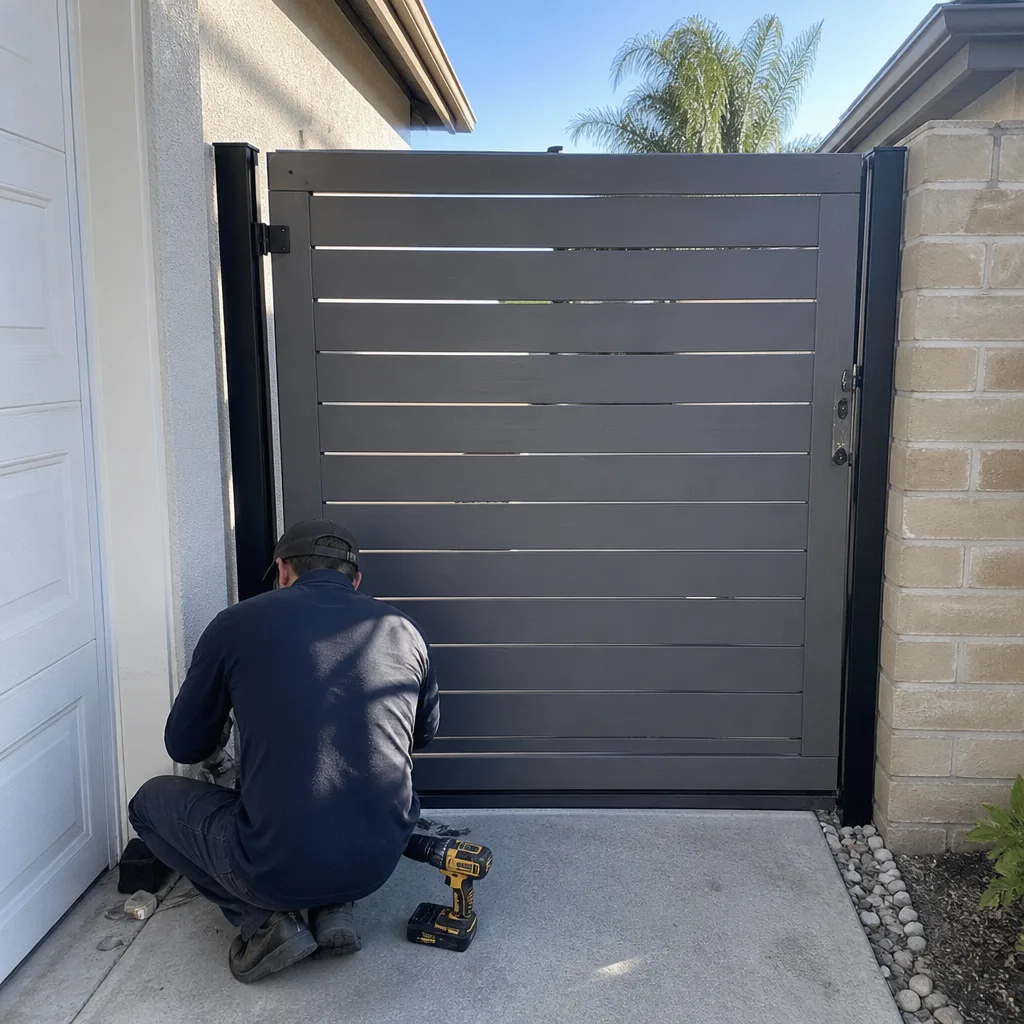
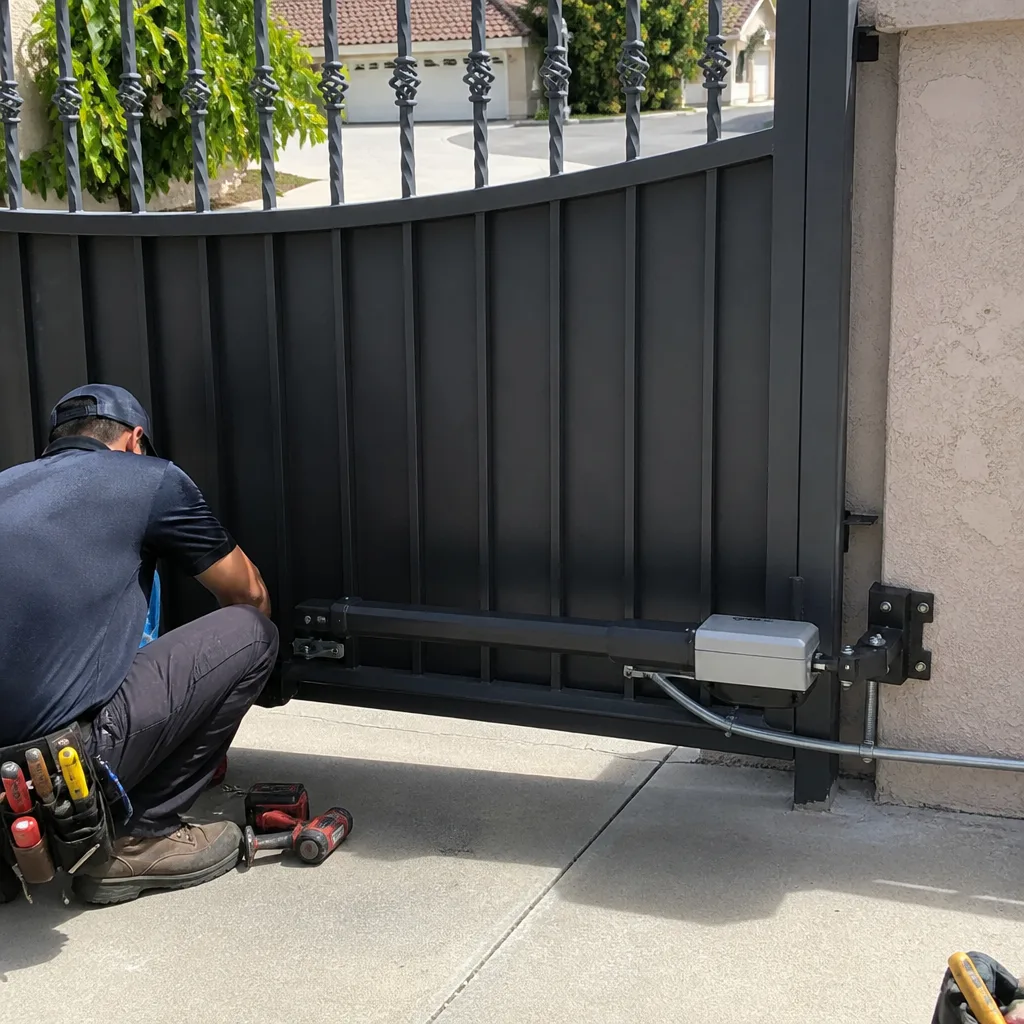
See the difference
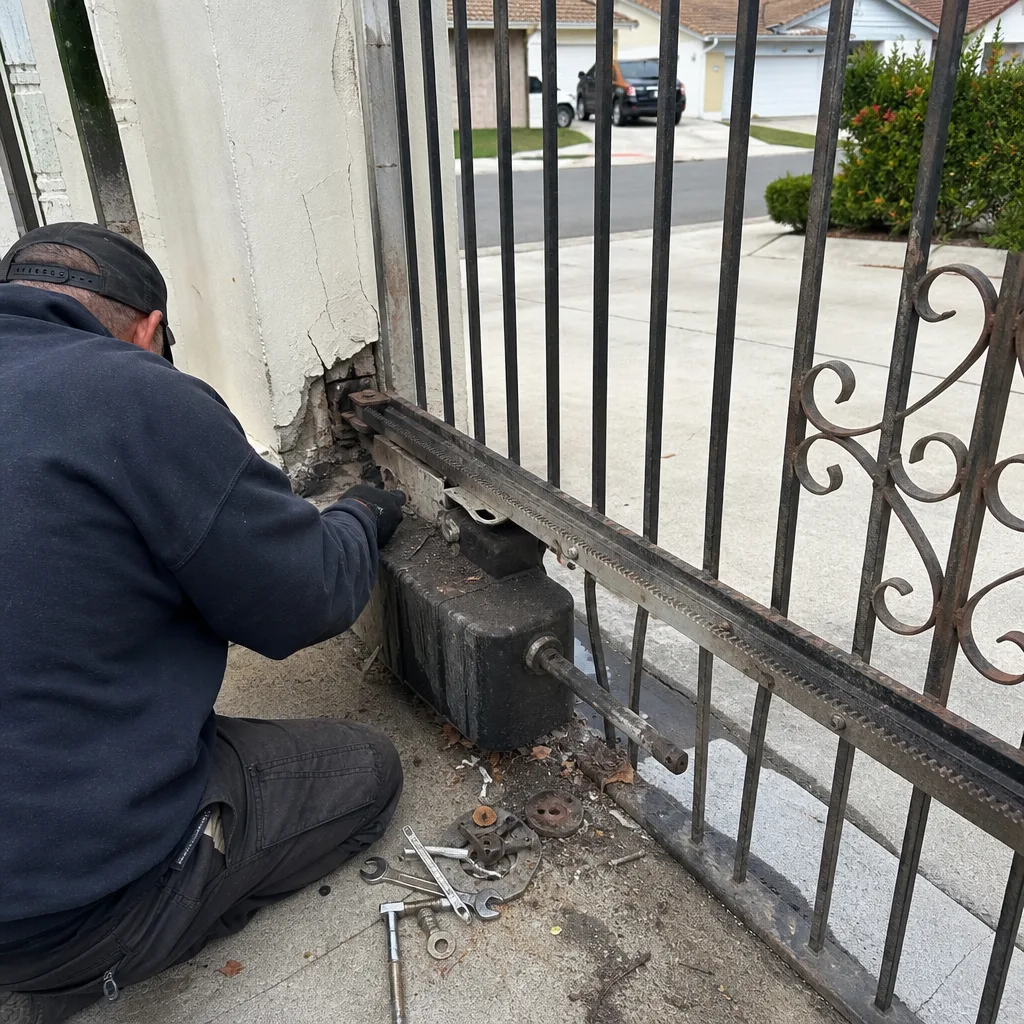 Before
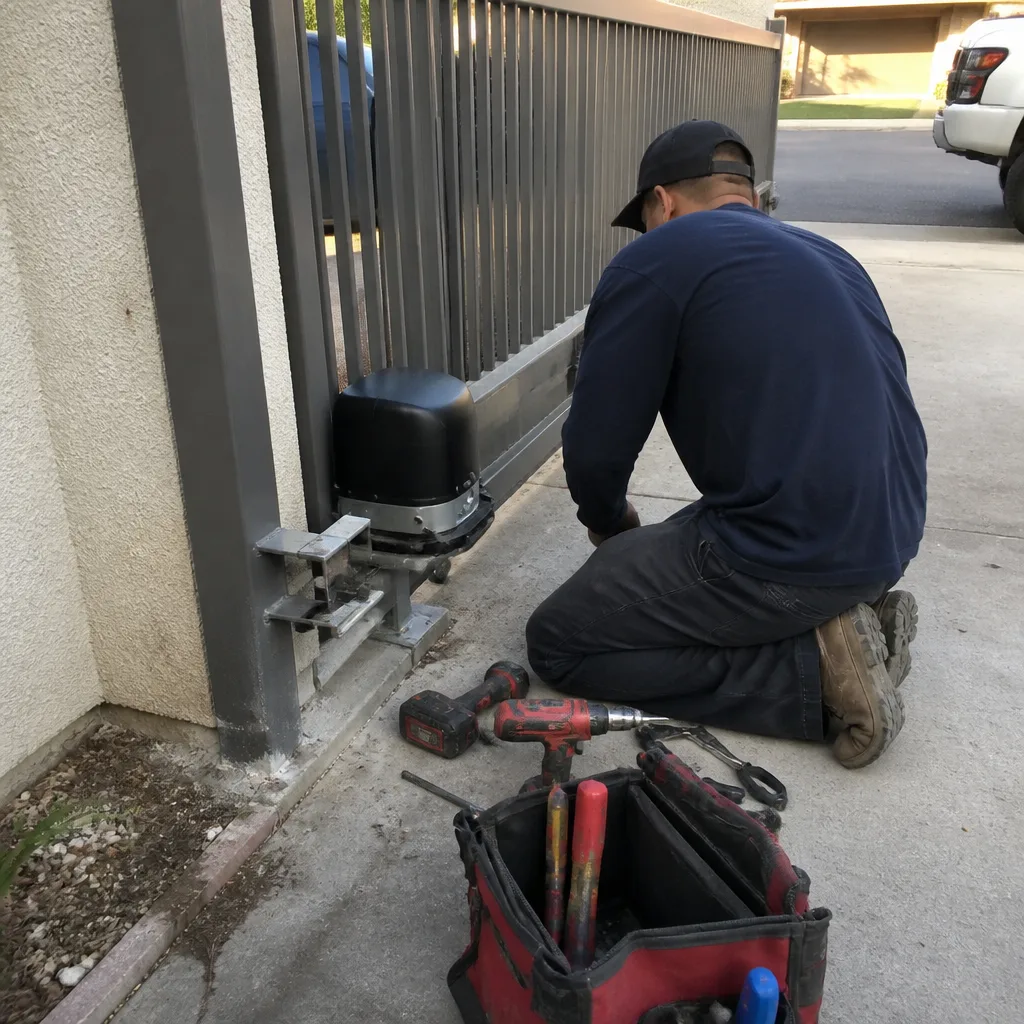 After
After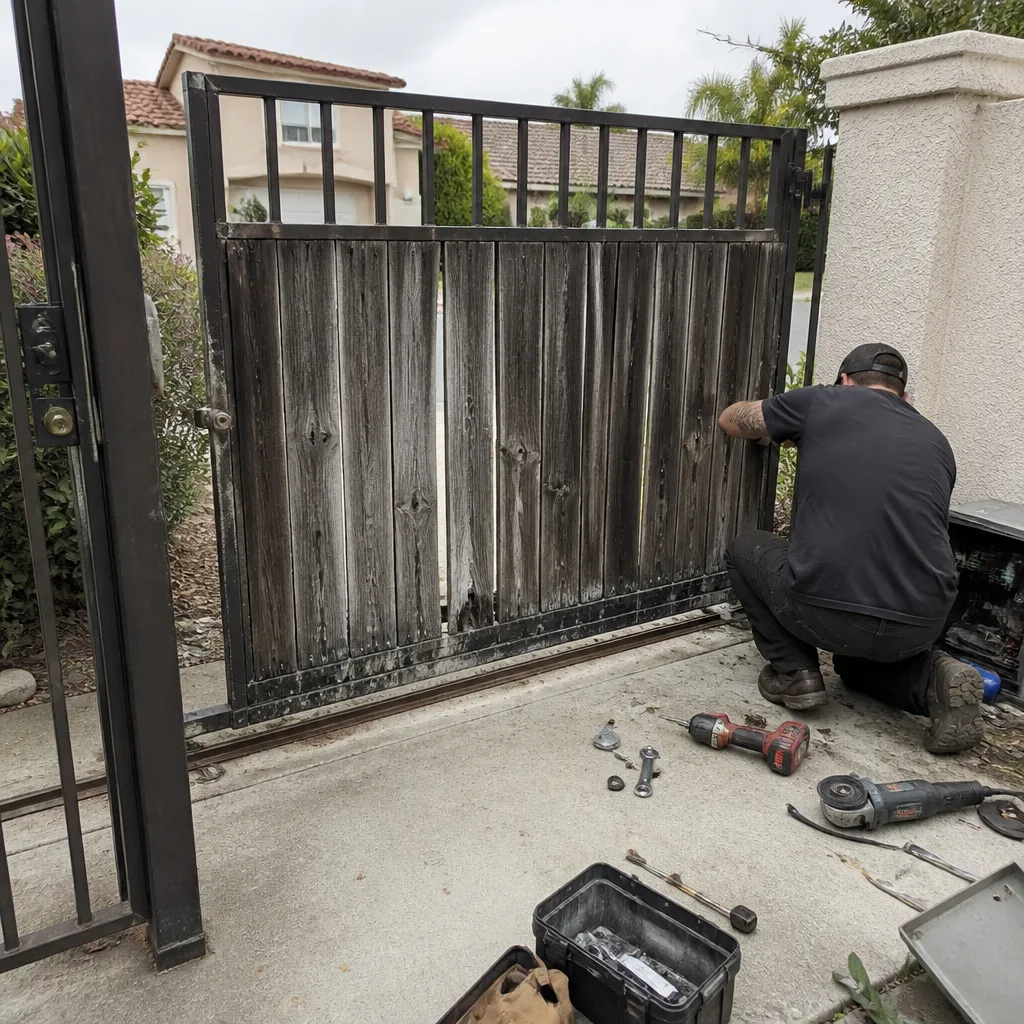 Before
 After
After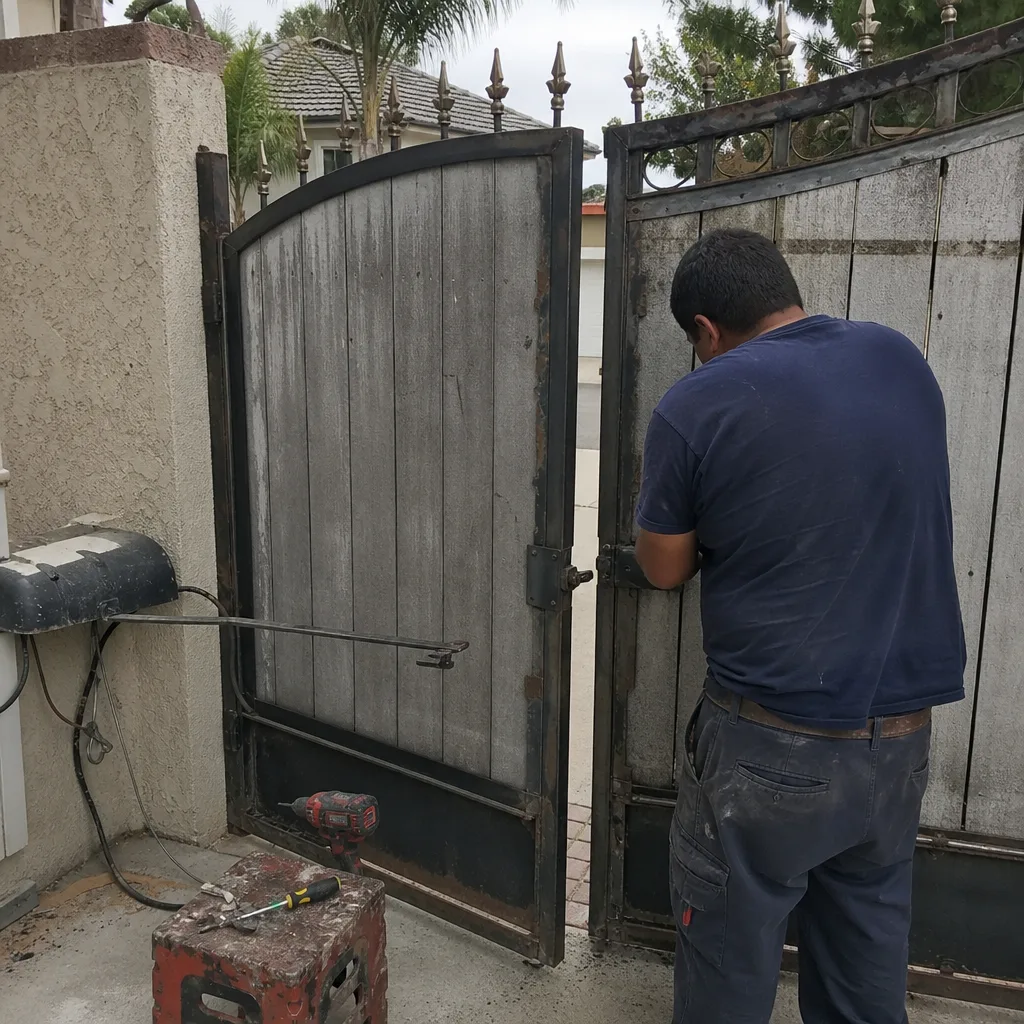 Before
 After
AfterWhen to Call a Professional
Any Tier 1 warning sign, any safety issue, or any time your gate is stuck open should trigger a call without hesitation. Beyond that, the honest answer is: call when you’ve logged a pattern. One instance of an intermittent problem might be nothing. The same problem happening three times over two weeks is a trend, and a professional can read that pattern correctly. Don’t wait for the gate to fully fail, because failure rarely happens at a convenient moment. Gate opener repair in Orange County is our daily work. Calder Gate Repair Orange County offers free estimates throughout the county, and you can reach a live person 24/7 at (831) 603-6424. Written price before work starts, written guarantee on every job, and a free return visit if the repair fails within the 365-Day Done Right Promise window.
Frequently Asked Questions
Most gate opener repairs in Orange County run $215 to $485 before parts, depending on the failing component and your opener brand. Simple fixes like capacitor replacements can be under $200; control board replacements on premium brands like FAAC can reach $600. Calder Gate Repair gives every customer a written price before any work starts, and that number doesn’t change at the door. Call (831) 603-6424 for a free estimate specific to your system.
A burning smell, a gate stuck open, or a gate that moves on its own are urgent, same-day issues. A gate that hesitates before moving, a remote losing range, or a breaker tripping monthly are not emergencies tonight, but they are “this week” problems. If your gate is closed and locked but won’t open, you’re secure and can schedule for the next available morning. When in doubt, call (831) 603-6424 and describe what you’re seeing, and Calder will help you decide the right timeline honestly.
A two-second hesitation between pressing the remote and the gate moving usually means the capacitor is failing to deliver start-up current to the motor. In Orange County’s inland heat, capacitors degrade faster. If ignored, the failing capacitor can take the control board with it, turning a $150 fix into a $500 repair. This is the single most important quiet warning sign homeowners miss.
A gate opener that trips the breaker repeatedly is flagging either moisture intrusion into an electrical junction box (common in Orange County coastal areas with salt air) or a motor that’s drawing excess current due to a mechanical drag or failing windings. If it trips more than once a month, it won’t fix itself. Call a professional rather than repeatedly resetting the breaker.
Yes, for most Tier 1 repairs. Calder Gate Repair covers the entire county, from coastal cities like Newport Beach and Huntington Beach to inland communities like Yorba Linda and Rancho Santa Margarita. Same-day service is available for urgent issues like gates stuck open, burning smells, or control board failures. Call (831) 603-6424 and a live person will book you with a real arrival time you can track.
Yes, and in most cases repair is less expensive than replacement. Each brand has its own common failure patterns: liftMaster tends toward limit switches, FAAC toward encoders and hydraulic wear, Elite toward control board issues after power events, and Mighty Mule toward force adjustment and gear train issues. Calder Gate Repair technicians are trained on all of these brands and stock common replacement parts locally.
The Bottom Line
Gate failure in Orange County is almost never sudden. The gate hesitating for exactly two seconds before moving is telling you something. The remote that only works close up is telling you something. The breaker that trips on a regular schedule is telling you something. Most homeowners miss these signals because they’re quiet, while the loud grinding noises get all the attention. But the quiet signals are the ones that predict expensive failures. Learn to read them, log the patterns, and act before the gate decides it’s done. Calder Gate Repair Orange County gives you a written price before work starts, a written guarantee on every job, and a free return visit if the repair fails within the 365-Day Done Right Promise window. The number that won’t surprise you is the one on the invoice. Call (831) 603-6424 for a free estimate, and get a real person on the line, 24/7.
Written by Nico Alvarez, Owner at Calder Gate Repair Orange County, serving Orange County since 2009.