
Last updated October 16, 2026
 Wrought iron
 Wood & steel frame
 Farm & ranch
 Sliding driveway gates
 LiftMaster operators
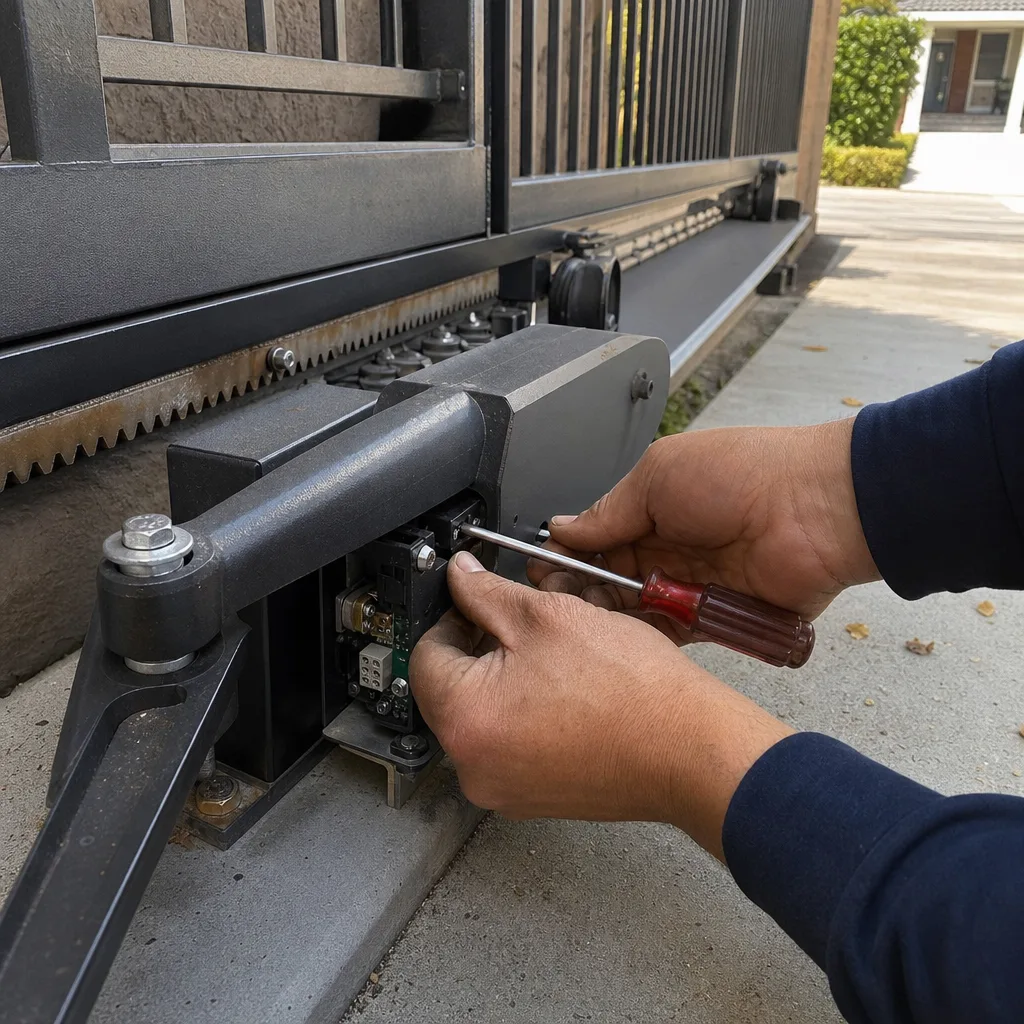
Free on-site gate assessment - hinges, posts, and your LiftMaster or Nice gate operator checked before anything is quoted
The assessment is free and the quote is the invoice.
Get your free estimateSeasonal Gate Repair Care for Orange County: Year-Round Homeowner’s Guide
Santa Ana winds don’t just bring fire risk. A 60 mph gust puts lateral stress on gate hinges and posts that’s equivalent to months of normal daily use, and most Orange County homeowners never check a single fastener afterward. Then the gate sags, the opener strains, and a $40 hinge replacement becomes a $900 post reset. This guide maps the four actual stress windows our climate throws at automatic gates, so you can schedule maintenance before the gate schedules it for you, usually at the worst possible moment, like the morning of a holiday party. For a deeper dive, see The Complete Guide to Gate Repair in Orange County.
Quick Answer
Seasonal gate maintenance in Orange County means checking four specific stress windows, not four traditional seasons. The critical periods are Santa Ana wind season (October through December), winter rain events (January through March), the marine layer humidity peaks of May and June, and the hot inland summer months of July through September. A homeowner can handle most of the inspection work in about 90 minutes per season, and the payoff is avoiding the two most common Orange County gate failures we see: snapped hinge welds after wind season and thermal-bind alignment issues in August.
Styles & brands we work with
Table of Contents
- Santa Ana Wind Season: October Through December
- Winter Rain Events: January Through March
- Marine Layer Humidity: May Through June
- Peak Heat and UV Months: July Through September
- Coastal Salt Air vs. Inland Heat: Why Dana Point and Chino Hills Need Different Schedules
- The Snowbird Checklist: Preparing Your Gate for Extended Absence
- What Your Opener Brand Needs Seasonally
- Common Mistakes to Avoid
- When to Call a Professional
- Frequently Asked Questions
Santa Ana Wind Season: October Through December
Orange County’s first real stress window starts when the offshore winds kick up in October. These are dry, gusty northeast winds that routinely hit 40 to 60 mph in canyon-adjacent neighborhoods like Yorba Linda, Anaheim Hills, and the foothill communities along the 241 toll road. What most homeowners don’t realize is that a gate is essentially a sail. A 16-foot driveway gate in a 50 mph gust absorbs hundreds of pounds of lateral force, and all of that force concentrates on three points: the hinge welds, the post base plates, and the opener arm connection.
We’ve seen gates in Villa Park that survived a decade of normal operation, then sheared a hinge clean off during a single strong Santa Ana event. The frustrating part is that the failure was visible weeks in advance as a hairline crack, if anyone had looked.
Post-Santa Ana Inspection Routine
Run this check after any wind event over 30 mph. It takes about 20 minutes.
- Inspect hinge welds and bolts. Look for rust powder around the hinge area. Orange County’s dry air doesn’t cause much corrosion, but stress fractures show as fine lines in the metal or paint cracking in a circular pattern around the bolt head.
- Check post base plates. Walk to each gate post and look at the concrete. A shifting post leaves a visible gap between the plate and the concrete, or a crack radiating outward from the bolts. Tap the post with a rubber mallet. A solid post rings; a loose one rattles.
- Clear debris from the gate track. If you have a sliding gate in a neighborhood with mature eucalyptus or palm trees, wind events deposit leaves, fronds, and seed pods directly into the track. A single palm frond wedged in the V-track is enough to trip the obstruction sensor and leave your gate stuck open.
- Test the safety edges. Debris-activated safety edges, the rubber strips or contact sensors along the gate’s leading edge, are particularly vulnerable after a Santa Ana. Dry leaves, small branches, or accumulated dust can cause false triggers. Run the gate once and watch for hesitation or reversal mid-cycle.
- Verify the opener arm connection. On a swing gate, grab the opener arm where it meets the gate leaf and try to wiggle it. Any movement beyond a fraction of an inch means the pin or bushing has worn, and wind loading accelerates that wear dramatically.
Most Gate Repair calls we get in November and December trace back to wind damage that wasn’t caught at the hinge and post level. One thing worth doing now: take photos of your hinges and posts after you’ve inspected them. You’ll have a baseline for comparison next season.
Winter Rain Events: January Through March
Orange County’s rainy season is compressed and intense. We may get 85% of our annual rainfall between January and mid-March, often in a handful of heavy storms rather than in a steady drizzle. For gate hardware, that pattern is harder on components than a city like Seattle’s constant light rain, because the cycle of saturation and drying creates expansion and contraction in wood, concrete, and powder-coated steel. The result is what we call “rain creep”: a gate that was perfectly aligned in October is binding against the post by February, not because anything broke, but because the post footing settled a quarter inch during the first heavy saturation.
The winter checklist for Orange County homeowners is short but specific:
- Clear the weep holes on operator housings. Every gate operator has small drainage openings at the base. If leaves or mud block them, rainwater pools inside the housing, which leads to control board corrosion. We’ve opened LiftMaster and FAAC housings after one wet winter that looked like a cup of tea had been poured inside.
- Check the gate gap. With the gate fully closed, walk the gap between the gate leaf and the post. In January, after rain, you want to see an even distribution of space. If the gate touches the post or the latch doesn’t engage cleanly, the footing has moved and the gate needs re-shimming or post stabilization.
- Lubricate after the storm, not before. Water washes away grease and light oil. A rain event strips lubrication from chain drives, slide tracks, and hinge pins. Once the rain stops and the sun has dried the metal, apply a silicone-based lubricant. Avoid WD-40 on chains, it’s a solvent and too thin to hold up on an automatic gate.
- Inspect low-voltage wiring connections. If your underground wire runs through a soggy stretch of lawn, the splices can wick moisture. A BFT or Linear opener that works fine in October but ghosts or trips in January is often chasing a wet splice, not a failed board.
Homeowners in low-slung areas of Costa Mesa, Fountain Valley, and Huntington Beach have an additional consideration: minor flooding. If water pools at the base of your gate posts for 48 hours or more, the concrete footing is sitting in saturated soil. That’s not an immediate failure, but it’s the primary cause of post lean in flat, coastal Orange County neighborhoods.
Marine Layer Humidity: May Through June
May Gray and June Gloom may be a running local joke about beach weather, but for gate hardware in coastal Orange County, the marine layer is a legitimate corrosion window. The marine layer sits low and dense over coastal cities like Newport Beach, Laguna Beach, Dana Point, and San Clemente for weeks at a time. The relative humidity at ground level stays above 70% for most of the day, and the air carries a fine salt mist that settles on everything. Unpainted mild steel, cheap zinc-plated fasteners, and exposed control board contacts are all at risk.
This is the one time of year when Orange County’s coastal gate owners should be more aggressive about maintenance than their inland neighbors. Here’s what matters:
- Check for white corrosion powder. Aluminum gates show corrosion as a chalky white residue, especially around fasteners where dissimilar metals meet. If you see white powder at a hinge or bracket, the fastener is galvanically corroding. It’s a $4 bolt today and a cracked casting tomorrow.
- Exercise the gate daily. During long marine layer spells, a gate that sits closed for days at a time accumulates moisture inside the operator housing. Running the gate once a day warms the housing and evaporates the condensation. We recommend coastal owners run their gate at least once daily between May 1 and July 15, even if they’re not leaving the house.
- Inspect control board connections. If your opener, whether it’s a LiftMaster or a Linear, has a translucent housing, look for condensation droplets inside. A foggy housing means the seal has failed. If you can’t see inside, check the board by running the gate and watching for intermittent RF reception or delay in response to remote commands. Those are early signs of contact corrosion.
- Clean photo eye lenses. The photo eyes, the small sensors near the ground on either side of the gate that stop the gate when the beam is broken, collect marine layer film fast. A gauzy lens causes intermittent obstruction faults. Wipe them with a dry microfiber cloth, no chemical cleaner.
If you’re in Dana Point, Corona del Mar, or along the Balboa Peninsula, you’re in the highest-salt environment in Orange County. We tell our coastal customers to think of the marine layer as a maintenance season that arrives every single year, not a fluke, and to treat it like an oil change: a cheap habit that prevents an expensive repair.
Peak Heat and UV Months: July Through September
Inland Orange County has a different summer problem. In cities like Chino Hills, Yorba Linda, Orange, and Anaheim, July and August temperatures routinely climb into the 90s and stay there, and the gate hardware responds to that heat differently than it does to coastal murk. Metal expands. Powder coating breaks down. Plastic gears and limit switch housings inside operators get brittle. And in neighborhoods with west-facing gates, the afternoon sun bakes the control housing for six straight hours, pushing internal temperatures past 140 degrees.
The single most common summer call we get from inland Orange County is a gate that “worked fine in the spring and now it sticks.” That’s thermal expansion and it’s a known variable, not a mystery. A swing gate that was marginally aligned in April, with a quarter-inch gap at the latch, can expand enough in direct July sun to bind completely. The metal doesn’t care that it worked last week. It’s now a half-inch longer, and the latch no longer lines up with the strike plate.
Summer Heat Checklist for Inland Orange County
- Run the gate at 2:00 p.m. If it’s going to bind from heat, it’ll happen at peak sun. A gate that runs cleanly at 2:00 p.m. in August will run cleanly at 8:00 a.m. all year. Test it when it’s hottest.
- Listen for a changed motor pitch. When thermal expansion makes a gate bind, the opener motor works harder, and the sound drops. If your operator sounds lower or slower than it did in May, don’t wait. The alignment issue is small and cheap to correct now, expensive when the gear train strips.
- Inspect UV-damaged plastic parts. The limit switch housing, the RF antenna cover, and the plastic gear covers degrade in direct Orange County sun. Look for hairline cracks, chalky surfaces, or yellowing. A cracked limit switch housing lets dust in, and dust inside a fine-tolerance switch means it eventually misreads the gate position.
- Keep the photo eyes aligned. Heat softens the brackets that hold photo eyes in place, especially on stucco posts. If the bracket sags a few degrees, the beam drifts and the gate faults intermittently. This is one of the most misdiagnosed problems we see: a homeowner believes the opener is failing when the actual issue is a heat-sagged sensor bracket.
For inland Orange County, this is the season when small alignment problems become big mechanical failures. The gate that sticks in July was almost always the gate that was barely clearing the latch in April. Our advice is to do this 10-minute summer check starting in late June and repeat it as needed through September.
Coastal Salt Air vs. Inland Heat: Why Dana Point and Chino Hills Need Different Schedules
Orange County is procedurally small and climactically enormous. The maintenance schedule that keeps a gate healthy in Chino Hills is the wrong schedule for a gate in Dana Point, and vice versa. Generalizing here is how gates get over-maintained in one respect and neglected in another.
Dana Point, Laguna Beach, Newport Beach, San Clemente, Corona del Mar should schedule the bulk of their annual budget around corrosion prevention. Salt air and marine layer humidity attack hinges, fasteners, control boards, and bare metal edges. These homeowners benefit from a more frequent lubrication schedule (every 90 days is reasonable), stainless steel replacement fasteners where possible, and an annual control board inspection, especially if the opener is a BFT or FAAC, which have denser electronics than some domestic brands. The heat is not the primary enemy here. Moisture and salt are the enemy.
Chino Hills, Yorba Linda, Anaheim Hills, Orange, Villa Park face a different dominant threat: thermal expansion and UV degradation. Coastal corrosion is less of a concern for these homes, but heat-related alignment drift is a much bigger factor. These inland homeowners should test their gate at peak afternoon temperatures during summer, inspect plastic components annually for UV damage, and keep an eye on post movement during the most intense heat weeks. Lubrication in these areas is less about corrosion prevention and more about keeping moving parts cool and friction-free when metal has expanded.
The difference sounds academic until you’re looking at a repair invoice. We see different failure modes from coastal and inland Orange County, and we plan our service recommendations around them.
The Snowbird Checklist: Preparing Your Gate for Extended Absence
Orange County has a significant population of snowbirds, homeowners who spend the summer months in cooler climates or the winter months elsewhere. That’s a unique and under-served need in gate maintenance: a gate that will sit unused for three to six months, unattended, in a climate that doesn’t pause while you’re gone. And unlike homes in truly cold states, there’s no frozen-pipe urgency to shut the system down completely. The gate just sits there, and the problems happen quietly.
The biggest risks to an unattended gate in Orange County are not what you’d expect. They’re UV exposure on stagnant components, moisture intrusion into an idle operator, and creeping post movement that no one notices until it’s too late. An absent homeowner can’t catch the early signs, so the preparation has to happen before departure.
- Run the gate fully through its cycle at least once a week. If that’s not possible because you’re away, have a neighbor or house sitter do it. Or, if your opener has a timer function, program a short cycle. A gate that sits closed for six months has condensation inside the housing, thick grease separation in the gearbox, and a higher likelihood of a stuck limit switch on return. We tell our snowbird customers: a gate that exercises is a gate that works when you come back.
- Lock out the opener and secure the gate manually. If you won’t be running the gate at all, disengage the opener and latch the gate fully in the closed or open position, whichever is safe for your property. A gate held partially open with the opener arm connected is a wind sail waiting for the first strong Santa Ana.
- Turn off the opener power to protect electronics. If you won’t be home for months and you’re not running the gate, shut off the breaker to the operator. This protects the control board from power surges and brownouts. Just know that you’ll need to re-sync remotes when power is restored, and some older Linear and Mighty Mule units may need a manual reset.
- Take a photo of your gate and hinges before you leave. When you return, you can compare. If the gate has shifted a quarter inch, you’ll see it in the photo. This is the simplest way for an absent homeowner to catch post movement that happened while no one was watching.
- If you’re away for the entire Santa Ana season, have a professional do a pre-departure inspection. Most of our snowbird customers schedule a gate inspection in late September, before the winds start, and we check all the failure points that typically underpin winter repairs. It’s a half-hour appointment that catches the hinge crack before it becomes the post replacement.
Snowbird homeowners in neighborhoods like Leisure World in Seal Beach, age-restricted communities in Laguna Woods, and seasonal homeowners in Palm Springs-facing areas of east Orange County should think of the gate as a vehicle, not a fence. A car that sits for six months needs a battery tender and fresh fluids. A gate that sits for six months needs the equivalent attention.
If you’re planning an extended absence from your Orange County home, you’ll find more detail in our Gate Repair in Orange County guide, which includes a pre-trip checklist we’ve refined over years of helping snowbird clients.
What Your Opener Brand Needs Seasonally
Not all gate openers are equally vulnerable to Orange County’s seasonal conditions. We work on nine major brands, and each has its own seasonal personality. Here’s what matters most for the four brands we see most often on residential gates across Orange County, and what you should watch for as the seasons turn.
LiftMaster. The workhorse of Orange County residential gates. LiftMaster operators handle thermal expansion well and their sealed housings resist marine layer moisture better than most. But their plastic gear trains are not designed for a gate that binds. If your LiftMaster gate starts sticking in July, the binding is what will damage the gears, not the heat itself. On these units, alignment is everything. Keep the gate aligned and the opener will outlast everything else on the post.
FAAC. FAAC units are common on higher-end swing gates in communities like Shady Canyon and Emerald Bay. They’re powerful and reliable, but their hydraulic models don’t like sitting idle for months. If you’re a snowbird with a FAAC hydraulic operator, the weekly exercise cycle is non-negotiable. Hydraulic seals dry out and then leak on first use after a long idle. That’s not an Orange County-specific problem, it’s a FAAC-specific problem that our climate’s dry air compounds.
BFT. BFT operators have a strong reputation with solar-powered gates, which are common in parts of Orange County where running 120-volt power to the gate is expensive. Solar gates have their own seasonal cycle here: the marine layer reduces solar charging in May and June, and peak summer increases it. If your BFT solar gate starts behaving erratically in late May, check the panel angle and make sure no coastal haze is being compounded by a dirty panel. A clean panel can be the difference between a functioning gate and a dead battery.
Linear. Linear operators are straightforward and widely used on sliding gates in mid-century neighborhoods like Fullerton and Placentia. Their achilles heel in Orange County is the limit switch, which tells the gate when to stop at open and close. A Linear limit switch that’s been sitting in a salty marine layer for a few seasons starts to read positions incorrectly, and the gate will occasionally stop short or slam into the post. If your Linear gate is stopping inconsistently, have the limit switch looked at before the misreads turn into physical damage.
Regardless of brand, the seasonal inspection logic is the same: know which season your microclimate delivers, and watch for how your specific opener reacts to it. The more you know now from this Gate Opener Repair in Orange County overview, the easier it is to catch a small problem before it strands you on the wrong side of the gate.
Common Mistakes to Avoid
- Assuming “no seasons” means “no maintenance.” Orange County’s climate is low-key, but it’s not gentle. The combination of Santa Ana wind loading, marine layer corrosion, and inland thermal expansion is a maintenance requirement in disguise. A gate that gets zero attention for two years in Chino Hills is likely already binding at the hinge by summer.
- Using WD-40 on chains and hinges. WD-40 is a solvent. It strips grease and evaporates, leaving metal drier than before. For automatic gate chains and slide tracks, use a silicone-based or lithium-based lubricant. For hinge pins, a drop of machine oil or silicone works. The wrong lubricant is worse than no lubricant.
- Ignoring a gate that’s “a little slow.” A gate that opens more slowly than it used to is telling you something. In most cases, the motor is working against friction from an alignment issue, a failing hinge, or a low-voltage condition. The fix at this stage is usually under $200. The repair after the gear strip is usually over $600.
- Postponing post inspection because “it looks fine.” Post movement happens invisibly. By the time you can see a visibly leaning post, the footing has completely failed and the repair is a concrete excavation job. The time to inspect posts is when they look perfect.
- Blocking the photo eyes with seasonal decorations. Every fall, we get calls from Orange County homeowners whose gate suddenly reverses or refuses to close, and the cause is a potted plant, a holiday decoration, or a trash bin set in front of a photo eye. Check the beam path before you call a repair service.
- Waiting until the gate breaks to address a known issue. “It’s been making that noise for a while” is the most common thing clients say to us. Most gate failures in Orange County are slow-motion failures. The gate was communicating for weeks or months. The expensive part wasn’t the repair, it was the ignored warning.
- Assuming every Orange County gate needs the same maintenance schedule. A Dana Point gate owner following an inland schedule will under-lubricate and under-inspect for corrosion. A Chino Hills gate owner following a coastal schedule will over-lubricate and never catch thermal drift. Tailor the plan to your microclimate.
When to Call a Professional
Most of the inspection steps in this guide are homeowner-friendly, but there’s a clear line where DIY crosses into liability. If you see a cracked hinge weld, a post that’s begun to separate from its concrete, a gate that’s dropped visibly on one side, or an opener that trips a breaker, stop and call someone who does this daily. Gate springs, especially on heavier custom steel gates, are under tension and can cause serious injury if removed incorrectly. If the gate won’t respond to any remote or keypad and you’ve already reset the breaker, it’s likely a control board or wiring issue, not something to guess at. Electric Gate Repair in Orange County covers the scenarios we see most when things go beyond maintenance. Calder Gate Repair Orange County offers free estimates on all gate work, and our written pricing before any work starts means there’s no guessing game. Call (831) 603-6424 and a live person will answer, 24 hours a day.
Frequently Asked Questions
For most Orange County gates, a homeowner inspection every season coupled with a professional service once a year is the right cadence. Coastal homes in the marine layer zone benefit from twice-yearly professional attention because corrosion moves faster there.
Most professional gate inspections in Orange County run $75 to $150 for a visual and mechanical check, while a full seasonal service that includes lubrication, alignment adjustment, and component testing typically runs $150 to $300 depending on the gate type and opener condition. Parts are quoted separately and in writing before any work begins.
Yes. Sustained 40 to 60 mph gusts push your gate laterally into its hinges, posts, and opener arm. The stress concentrates at the hinge welds and post base plates, and a gate that has been in service for years can fail suddenly during a single strong Santa Ana event. A post-wind inspection is the most overlooked maintenance step in Orange County.
Run the gate at the hottest part of the day. If it binds, stalls, or reverses at 2:00 p.m. but works fine at 8:00 a.m., thermal expansion is likely the cause. That means the gate needs an alignment adjustment, not a major repair. If it fails at all temperatures, the problem is mechanical or electrical. Call (831) 603-6424 for a free evaluation.
Secure the gate in a closed or fully open position, disconnect the opener arm so the gate is not fighting the wind, power down the operator, and arrange for a neighbor to run a full open-close cycle at least once a week. A pre-departure professional inspection is the best insurance against returning to a failed gate.
LiftMaster, FAAC, BFT, and Linear all perform well in Orange County if they’re maintained for the right climate. Coastal homes need corrosion-focused care regardless of brand, while inland homes need alignment and thermal test checks. The brand is less important than the seasonal habits of the homeowner maintaining it.
The Bottom Line
Orange County doesn’t have a traditional four-season maintenance calendar, and pretending it does is how gates fail at the worst times. What we have instead is four distinct stress windows: wind, rain, marine layer, and heat. A homeowner who understands those windows and acts before each one, rather than after, avoids the most common failures we see every year. Run the inspections. Take the photos. Watch the gate run hot. And when something doesn’t look or sound right, get a professional opinion before the small issue becomes a big repair. Your gate will work when you need it, and the invoice will never surprise you.
Calder Gate Repair Orange County home | Free estimates in Orange County. Call (831) 603-6424.
Written by Nico Alvarez, Owner at Calder Gate Repair Orange County, serving Orange County since 2009.
See the difference
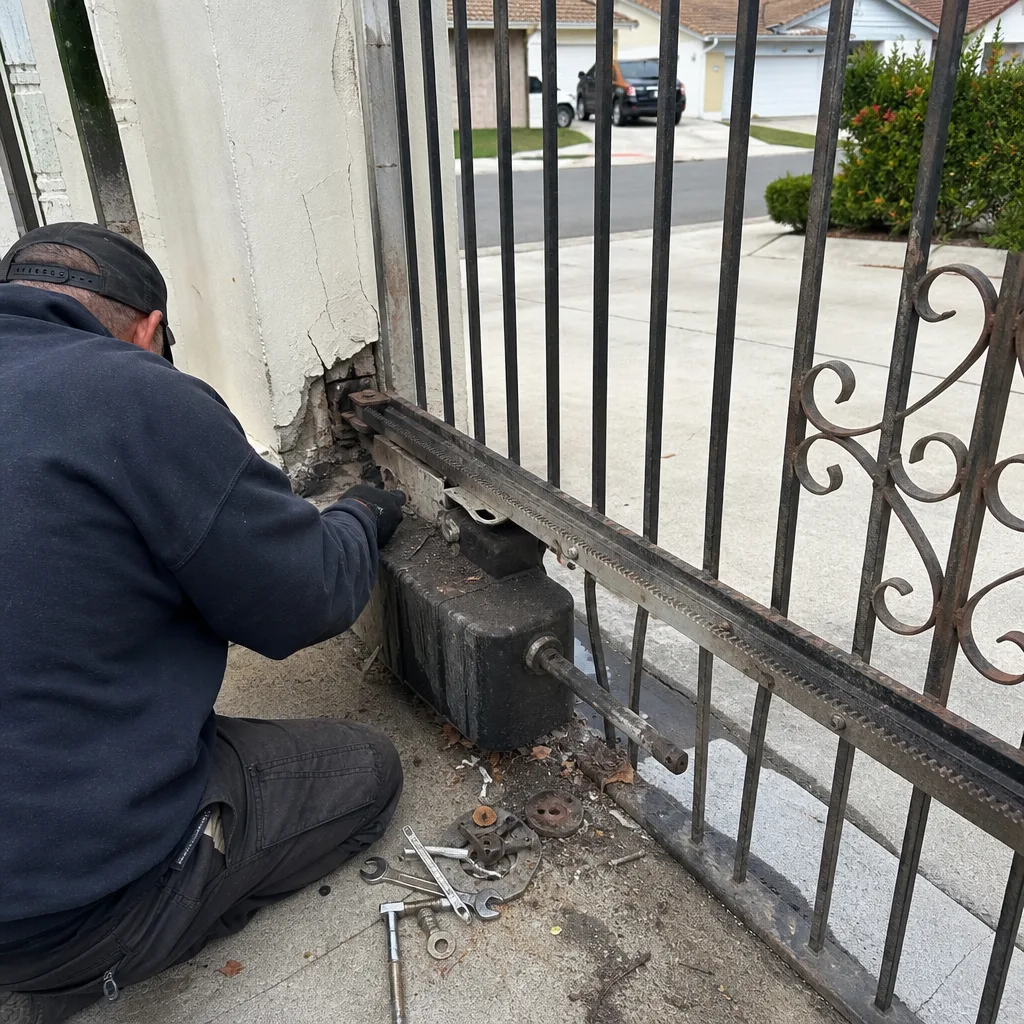 Before
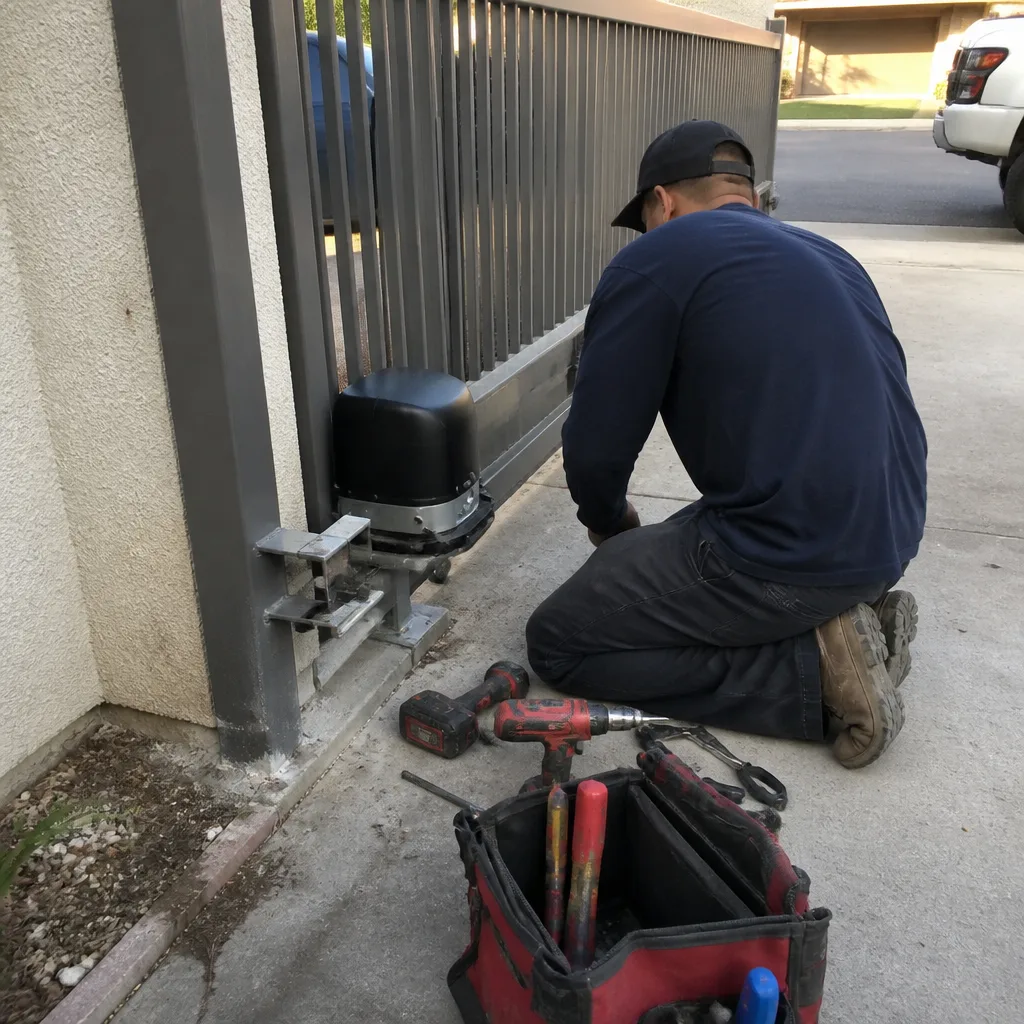 After
After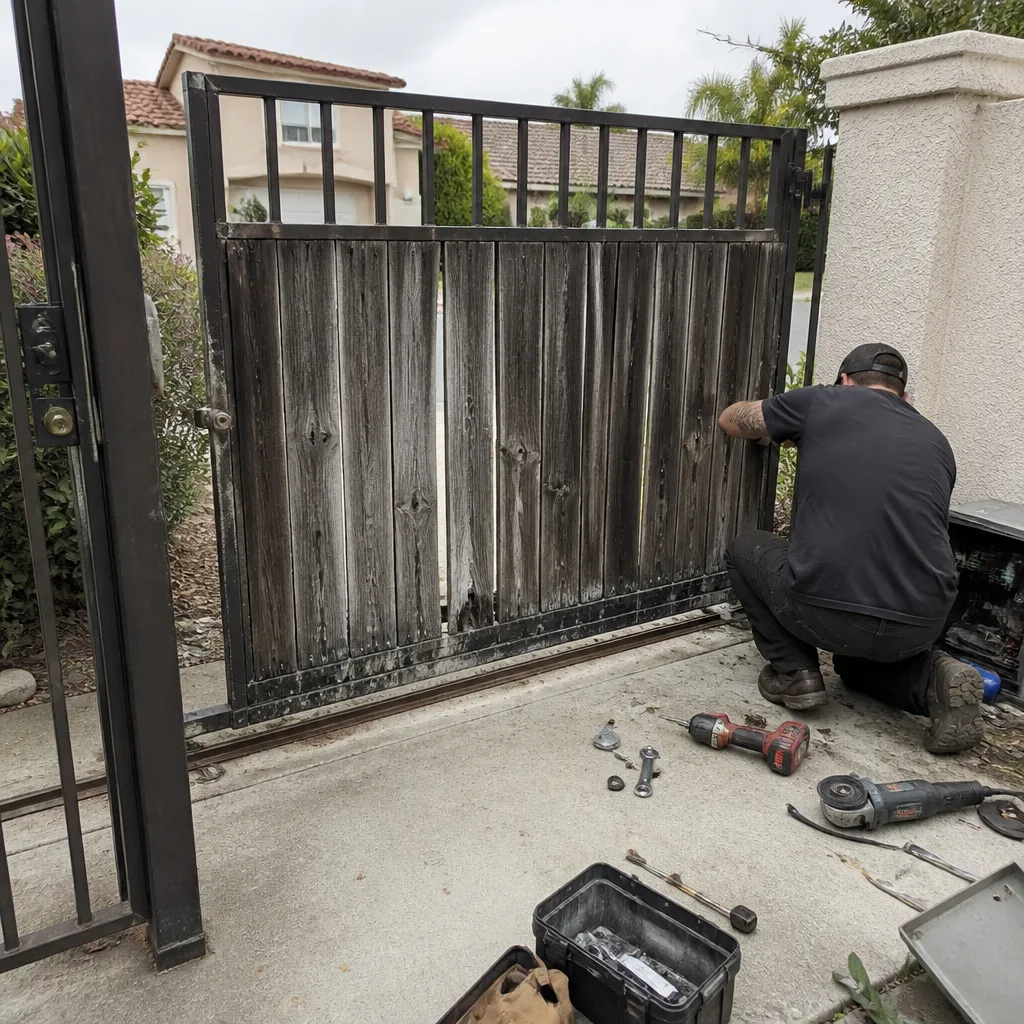 Before
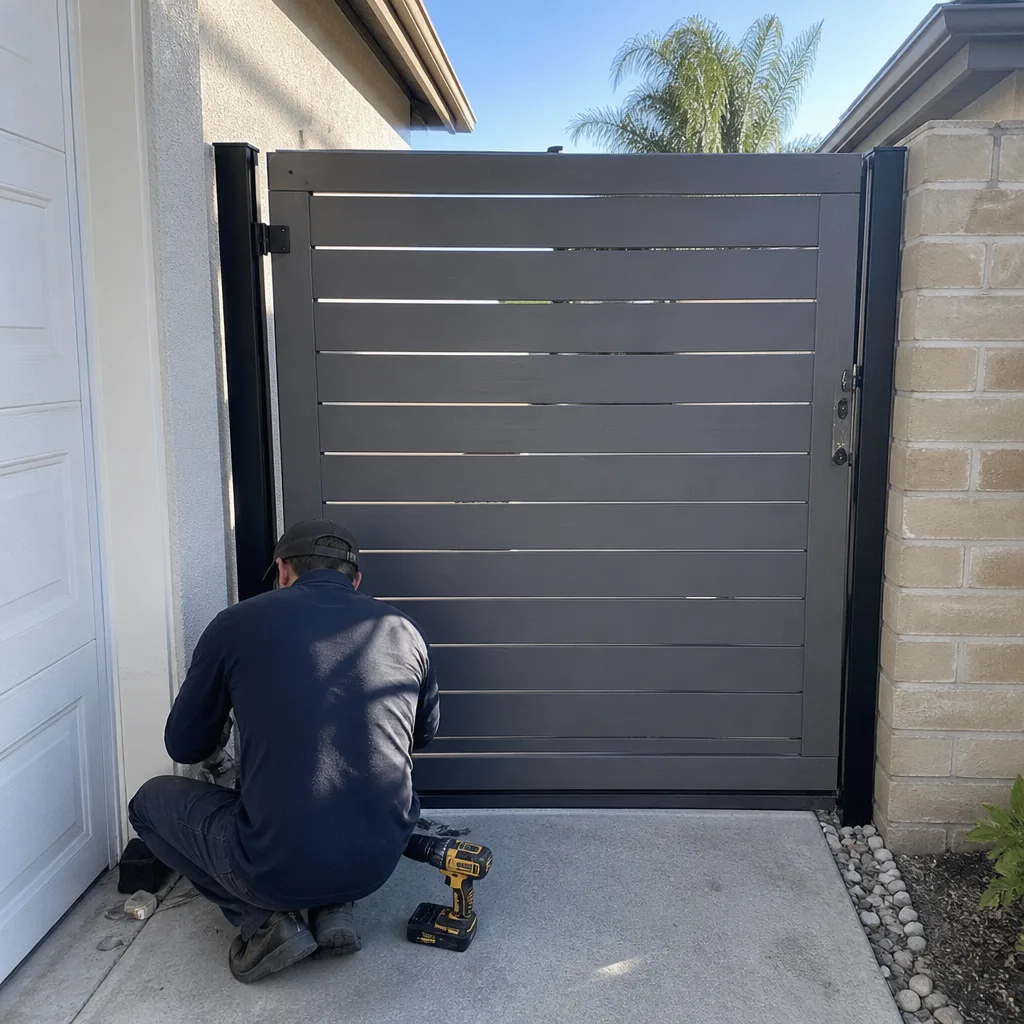 After
After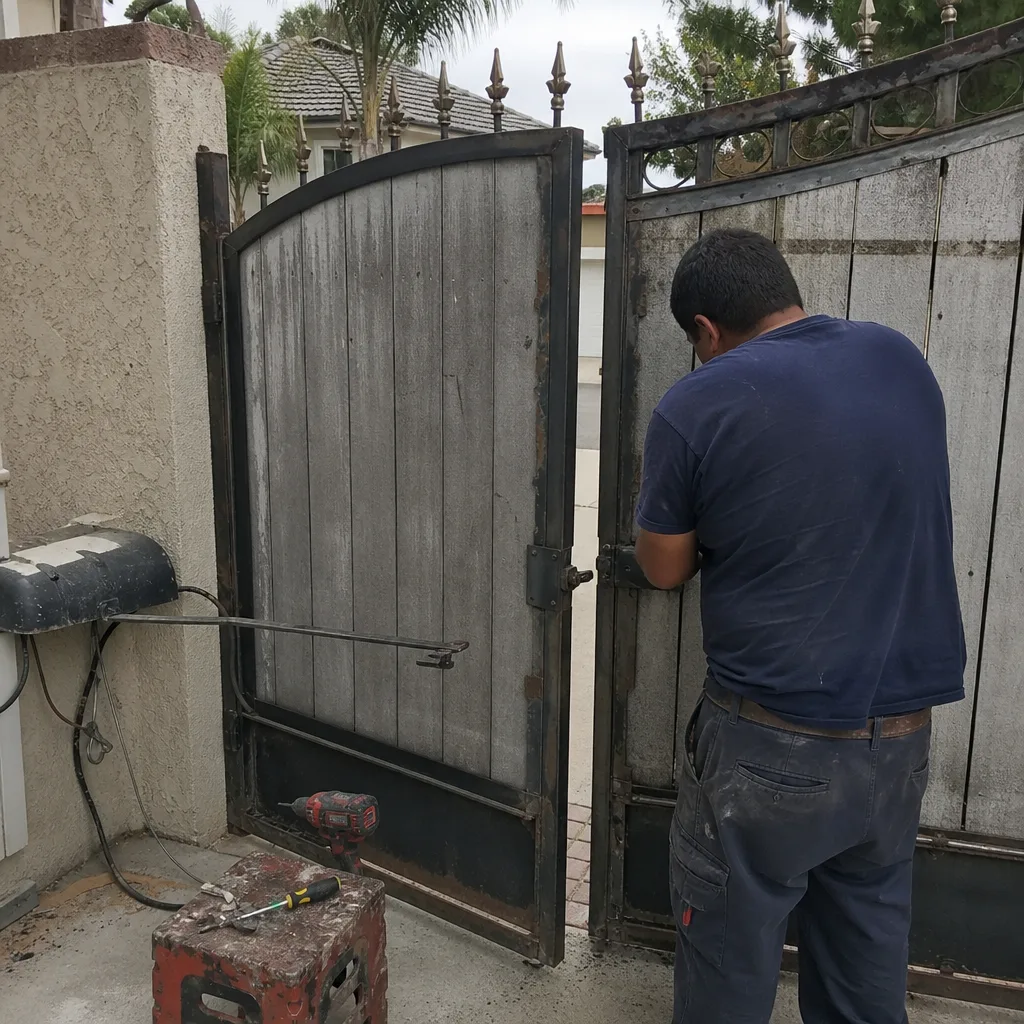 Before
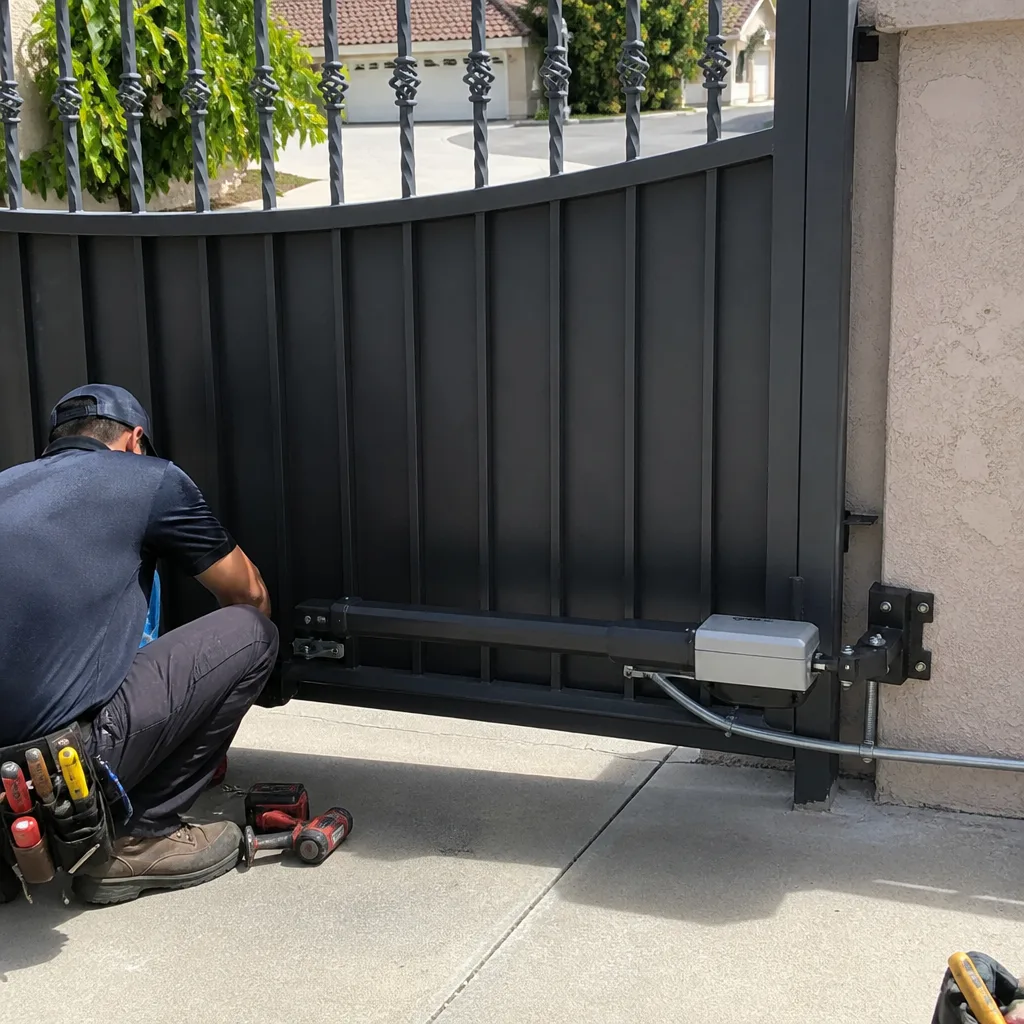 After
After